High-Tech Gründerfonds' latest fund allows corporate LPs to invest in startups that are closer to providing financial return.

German corporate-backed venture fund High-Tech Gründerfonds (HTGF) is extending its later-stage investment capacity to include more chances for its corporate backers to participate in more proven technologies where exits are more likely, says managing director Achim Plum.
HTGF was formed in 2005 through a German government mandate to invest in the country’s most promising startups at seed stage and is partially state funded, taking the rest of its capital from German companies as limited partners. It expanded its focus to later-stage rounds last year with the close of a €660m ($765m) Opportunity Fund, and has now given its corporate backers the chance to co-invest in those rounds through a Matching Fund of approximately €25m.
“It’s the same investment paradigm but was only open for our seed fund LPs, giving them the opportunity to participate in the value creation at later stages,” Plum says.
Over the past two decades, HTGF has grown into one of Europe’s most active early-stage investors, backing some 750 companies. But German companies are as prone to the post-series A ‘valley of death’ as startups anywhere else. The Opportunity Fund is part of a move to make sure they can continue to be funded all the way to a successful exit.
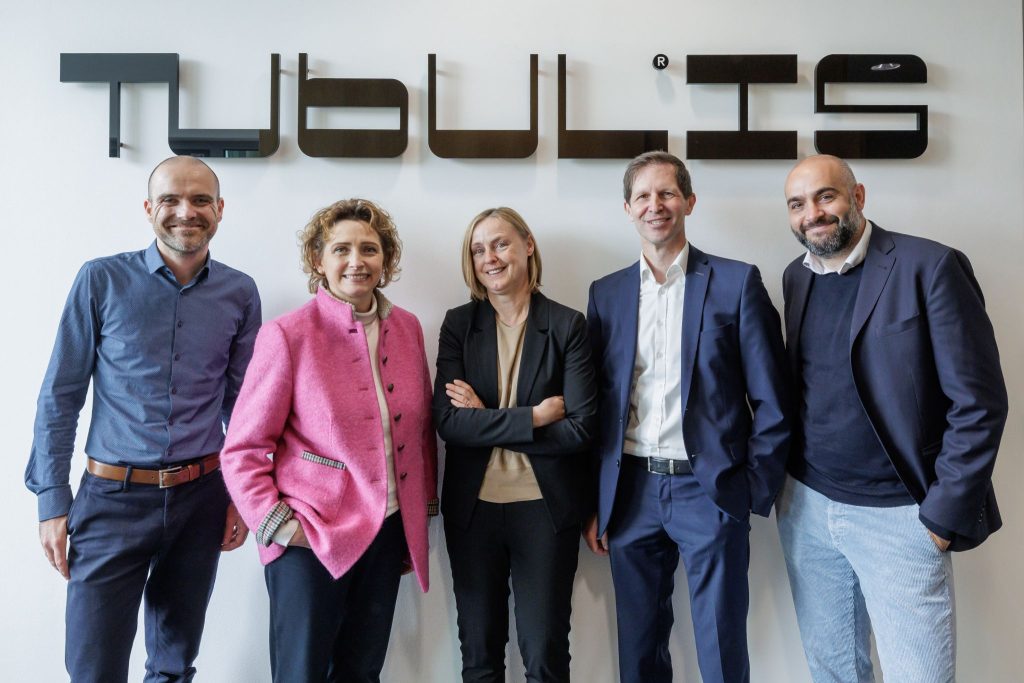
The fund’s most recent investment was in the €344m series C round for cancer drug developer Tubulis last month, by a large distance the biggest round it has ever been part of, five years after HTGF co-led the company’s $12.3m series A.
“The fund allows us to do follow-on investments with much larger tickets in companies from our seed fund portfolio,” Plum says. “That was the situation with Tubulis – we invested the maximum possible amount from the seed fund in that round and then topped it up significantly with the Opportunity Fund.”
There is also a difference financially. Being an LP in HTGF’s seed funds gives corporate LPs an insight into startup technology very early on, but the matching fund means they can participate in rounds for companies with more proven technology, where an exit is likelier to happen, and to come sooner. It also expands the ways in which the firm partners with its corporates. HTGF will generally speak to its CVC team for its seed fund, while this fund will typically be overseen by its treasury team.
“It’s a very different value proposition because it’s purely a return on assets-based value proposition,” Plum says. “In the seed fund the value proposition is very much tech access – working with startups, getting tech scouting, being the radar for our LPs on the innovation front – combined with an economic ambition.”
A new broom as HTGF looks into the future
The expansion to later investments has come alongside a reorganisation of the firm’s structure. HTGF operated with two managing directors for many years, before promoting long-term partner Romy Schnelle to the same position in 2023.
Plum arrived at the start of this year, stepping into the shoes of outgoing managing director Guido Schlitzer, before Alex von Frankenberg left after 20 years’ service last month to be replaced by incoming managing director Sebastian Borek. He completes a management team that is taking a new approach, largely separating the portfolio into three sectors, with each overseeing an area.
“I do life science and biochemistry, Romy covers industry, deep tech and climate tech while Sebastian focuses on the digital space,” Plum says. Each partner brings a certain set of experiences, overseeing teams that collaborate on deals in those segments, such as an AI tool for healthcare.
“That’s inside as well as outside, so we manage the teams internally but also represent those teams to the outside. It’s a different set-up which actually works very well for the industry segments because we all bring in networks from our respective industries.”

HTGF closed its fourth seed fund at €494m in early 2023, with 45 domestic corporates supplying capital. Those LPs range from multinationals with their own corporate VC set-ups such as Bosch and Bayer to specialty family-owned companies, known in Germany as the Mittelstand.
The figure represents a big leap from the first fund, in 2005, which only had six corporate backers, and the firm works closely with its corporate LPs. Each of the three industry segments has its own investment committees, which the LPs can contribute to. Bernard Mohr, who heads chemicals producer Evonik’s CVC unit, is on HTGF’s advisory board.
“Our LPs have access to our deal flow, so they can see what we’re working on, follow the trends, and understand where innovation is happening,” Plum says. “Each LP has an account manager, and we regularly hold workshops with them or sometimes join their strategy boards.
“They make money while getting access to technology, and that’s really why they come on board – it’s not just an expectation of financial returns.”
The ‘just’ in that sentence is significant as well. When HTGF was initially set up, the expectation was that the first seed fund would hopefully return half its money. But the fund ended up comfortably profitable, evidence that backing technologies at the earliest stage made sound business sense.
Now, HTGF aims to be profitable with all its funds, much as any VC investor would, and that ambition feeds into the Opportunity Fund.
“You can actually run a business like this profitably, even when you invest very early and very boldly”
“It showed that you can actually run a business like this profitably, even when you invest very early and very boldly,” Plum says, and Tubulis is a prime example. Although HTGF co-led its series A and was among its series C investors, most of its funding is from private investors. HTGF’s job is to get startups off the ground and give them the best chance of raising money from the market.
“Today, our ambition with every fund is to be highly profitable” Plum says. “We don’t subsidise – we invest.
“And we invest with the same criteria as any other VC, even though we operate as a public-private partnership. Why? Because we can only take companies to a certain stage, and then they need follow-on investors. If we invested in things that weren’t fit for follow-on VCs, it would be wasted public money – and wasted private money as well.”