Corporate VCs can bring technology and GPU access as well as cash, which is becoming essential for AI startups, says M12's Michelle Gonzalez.
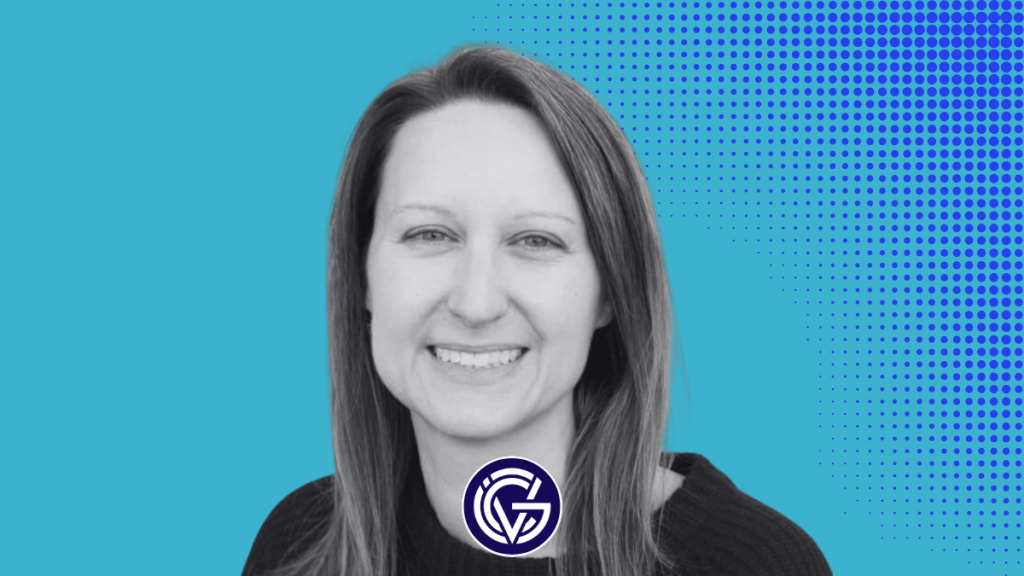
Corporate venture capital used to have a bad image, says Michelle Gonzalez, head of Microsoft’s CVC unit, M12. Now, in the AI age, she says, it’s almost seen as necessary.
“There is financial VC, and lot of them have their services – helping with talent, and perhaps their platform services – but I feel like in this day and age, and particularly with AI, the investment from a lot of corporates is really important to get access to customers and to some of the early technology,” she says.
“I think before, there was a lot of reticence and concern about bringing on a corporate investor early, versus at a series D or farther down the line. Now, there are still folks that still have that perspective. But I do think this AI-native age of founder recognises that having a strategic [investor], particularly one that has expertise in AI or access to GPUs or that can help with the go-to-market [process] and being a customer, or selling into the enterprise, even at the earliest stages, is an advantage. I don’t think that was necessarily the case 10 or 15 years ago.”
M12 was investing in AI long before the ChatGPT explosion two years ago. But the recent rapid growth in the capabilities of AI has made the company focus on very specific things when it evaluates startups in this area.
“They have to have a plan,” says Gonzalez (left). “Particularly if they’re an application, around how they are going to get out of the model blast radius, as these models continue to launch and get into kind of different applications in different verticals, whether that’s proprietary data or more hooks in the workflow.

Want to hear more from Michelle Gonzalez?
She is co-chair of our GCVI Summit in Monterey this month.
See more details about the Summit and how to join us at the event here.
“But because we’re investing, in some cases, at the earliest stages, we’re looking at the founder. Really looking at the founder. Do they have examples of grit? Do they have examples of how they would build out the company? Maybe they built a company in the past, and they have learnings from that. Are they facile with the new kinds of tools?”
It’s increasingly important for those founders to have a social media presence, she adds. Larger followings can mean a founder can attract the best developers to their startups, in a market that is becoming more and more competitive for recruitment.
Gonzalez also looks for founders with clear ideas on how to sustain the business. “Given one, there is so much competition from other startups; two, the incumbents are not just sitting around; and three, you’ve got the very well-funded model companies that are continuing to go into different application areas,” she says.
Every AI startup needs a moat of some kind, whether it’s proprietary data or unique workflows, it must be something the big model companies can’t recreate themselves in two or three months’ time.
It helps to have a vertical business model, concentrating on a specific area in depth. Gonzalez says one example is Didero, which has created AI agents that can use data from across an organisation to automate supply chain tasks like communicating with suppliers or tracking orders. M12 was part of its series A round last month.
AI coding, cybersecurity and GPU technology is in, SaaS is having to adapt
A crucial part of AI is going to be on the coding side, Gonzalez says. Her daughter has started her own dog-walking business, and it would be useful if she could create her own AI applications to help her run it. But even though she’s intelligent, even the most advanced AI coding platforms, like Lovable, still require some knowledge of coding. The next big breakthrough could involve something that removes that obstacle.
“Is there that next generation of things that really democratise the ability to create your own personalised kind of software? We’ve been looking at that that [potential] next wave and what that could look like for individual and end users.“
M12 is also looking at several areas adjacent to AI, including cybersecurity: if important parts of the organisation are placed in the hands of AI agents, they need to be secure. Gonzalez cites HiddenLayer, a developer of cybersecurity tools for AI models that last raised money in an M12-led round, as a company emerging in that space.
Another area is technology that can optimise the performance of GPUs, the chips that provide the basis for generative AI. The unit has a team that is focusing on GPU optimisation, and its recent deals include a $110m round for Neurophos, a Duke University spinout with an optical processing unit that makes inferencing – the process where an AI model applies its knowledge to a new problem – vastly more efficient than with conventional silicon GPUs.
However, M12, which is celebrating its tenth birthday this year, has a history stretching beyond the current AI boom. That means some of its portfolio companies have faced a reckoning in recent years.
Gonzalez told GCV in 2023 that there was an environment during the covid boom a couple of years earlier where huge rounds were being closed with minimal due diligence, culminating in the so-called SaaS Crash that saw software-as-a-service providers’ market capitalisations plummet early this year. Today, she says a lot of the companies M12 backed during 2021 and 2022 have had to tighten their belts and get to the point where they can break even, or at the very least sustain themselves independently.
“A lot of the companies we had in the portfolio at that time, or that we invested in at that time, had to make some really tough calls because of the pullback in capital and the SaaS Crash,” she says.
“Many of them have maintained that discipline, now they’ve had to think about how they pivot their business or adapt, and hopefully get to enough growth or investment that you can make the investments for AI.”
The startup world is now in another boom period, but there are differences, Gonzalez says. Whereas enterprise software may not have necessarily had huge overheads, AI companies face high expenses for buying chips or training models. This new wave of AI startups are growing revenue far more quickly than their SaaS ancestors, however, with Lovable and Cursor going from zero to $100m in annualised recurring revenue in their first year.
That is changing the dynamics of investing, Gonzalez says. Because everyone is aware of these high-profile examples, there is an expectation – particularly for AI applications – that they can hit those hockey stick-shaped growth rates. People are concentrating more on that and less on sustainable businesses with a high chance of a return on investment.
“I think there is more of a focus on growth, and it’s harder and harder to raise capital if you aren’t growing,“ Gonzalez adds.
“You can invest early on something pre-product, where you’re investing ahead of where you think the company’s going. But more and more now, because there are these high-profile examples of companies hitting these growth [metrics], if you aren’t experiencing that growth, it’s harder and harder to raise when you’re coming back to the market. People are expecting you to see that growth.”

Why investing early means a path of discovery
Gonzalez will be talking to TDK Ventures head (and current GCV chair) Nicolas Sauvage about the idea of corporate venture capital as a discovery machine at the GCVI Summit later this month, and while Microsoft has made some huge investments directly from its balance sheet at the top end of the market, in the likes of OpenAI and Anthropic, Gonzalez argues that M12 is taking bigger risks. Not in terms of capital outlay, but in the sense that there is less visibility into a company at series A stage. The unit and the startup discover the twists and turns together.
Part of that means M12 builds a relationship with the founders early and helps them grow, connecting them to a member of their portfolio development team who can help them build their technology and get to the market, potentially with Microsoft’s help. That gradual process, helping a small company to blossom into a larger one, is simply different to a nine-figure investment into a company that has scaled and which perhaps already has a large commercial relationship with Microsoft.
“At that point, a lot of times the business model might be more set, we know what this company is doing and where the trajectory of that is,” she says. “Whereas, I think for us, a lot of the time we’re making these bets and we’re not sure, right? Five or six years ago, we weren’t sure that inference chiplet was going to matter to the [AI] model makers. But we had a hunch. Or investing in a quantum company, also five or six years ago.
“The nice thing is that we can be more forward-looking because we’re investing earlier and with smaller cheques. But then we also get the opportunity when these companies are at their earliest stages. It’s really great because you talk to the founders all the time and you are working through with them what our channel strategy should be and how we can sell into the enterprise.”