Six spinout technologies — from lab-grown meat to satellite tech — that have come from UK universities usually overlooked by investors.

While investors more commonly look to world-renowned UK universities like Oxford, Cambridge and London for spinouts to invest in, there is also a steady stream of breakthrough innovation coming from other, less well-known institutions in the country.
We have curated a list here of six spinouts in technologies ranging from data centre cooling to 5G satellite telecoms software. They come from universities that even people in the UK have trouble locating on a map.
Despite their affiliation with less well-known academic institutions, these spinouts offer a picture of the kind of innovation happening across the UK’s university landscape.
Bactery, University of Bath

The team at this spinout from the University of Bath has developed a technology that makes electricity from soil. Bactery’s electrodes capture electrons that have been broken down organically by bacteria in soil. The company’s electronics system brings the electrons to the surface.
The technology was the brainchild of CEO and founder Jakub Dziegielowski, who did a PhD at the University of Bath with the intention of turning his idea into a commercial venture. With a maximum energy output of four watts per metre square, the company is targeting low power applications in sensing and IoT. It is initially directing applications at the agricultural sector where its technology can be used for powering remote sensors and IoTs for monitoring the state of soils.
While the technology still has low power output, the team have scaled it in the lab by six times “unlocking things like telecommunications, lighting, irrigation and more heavy-duty electronics,” says Dziegielowski.
“The ambition is to get to levels where we’re on par with other renewable energy technologies and really bring soil into the mix of renewables,” he says.
The company is raising $3m in a seed round. It has a lead investor and is looking to bring in other investors to reach its target.
The University of Bath has a 10% dilutable equity stake in the company.
AccelerComm, University of Southampton

This spinout from the University of Southampton makes software and firmware for 5G satellite networks. The 9-year-old company was founded by Rob Maunder, a professor at the university, who initially set out with his research team to develop technology that could meet the higher data rate requirements of 5G telecommunications.
Since its founding, the team has pivoted to focus on satellite 5G networks which can deliver universal mobile coverage. “Our technology is now getting deployed into satellites. We have our IP blocks in dozens of satellites that are in orbit today, and that number will grow over the coming years,” says Maunder, who is the company’s chief technology officer.
Over the next five years, the team aims to get its technology “into as many of those satellites as we can with as many different constellations as we can,” says Maunder.
The team is also looking at how to adapt to the advent of 6G, the next generation of telecommunications technology. Maunder foresees 6G as being more of a software update to existing telecoms infrastructure rather requiring a wholesale change to hardware and base stations. “6G has a big focus on tightly integrating the networks that are delivered from space with the networks that are delivered from base stations on the ground. That is a big driver for the area we are in.”
The company raised a $15m series B round in June from UK spinout investor IP Group, venture capital investors Bloc Ventures and IQ Capital, and corporate investor Swisscom Ventures.
When the company was founded, the University of Southampton took 33% equity stakes in its spinouts. It has since lowered its ownership requirements to between 5% and 10%. Its initial 33% dilutable share in the company has decreased to around 2%.
Roslin Technologies, Roslin Institute, University of Edinburgh
The Roslin Institute is associated with producing a famous personality – Dolly the Sheep, the first cloned animal created from an adult cell in 1996. It is through the institute, the animal biosciences research arm of the University of Edinburgh’s veterinary school, that spinout Roslin Technologies has emerged with a venture that produces stem cells for cultivated meat.
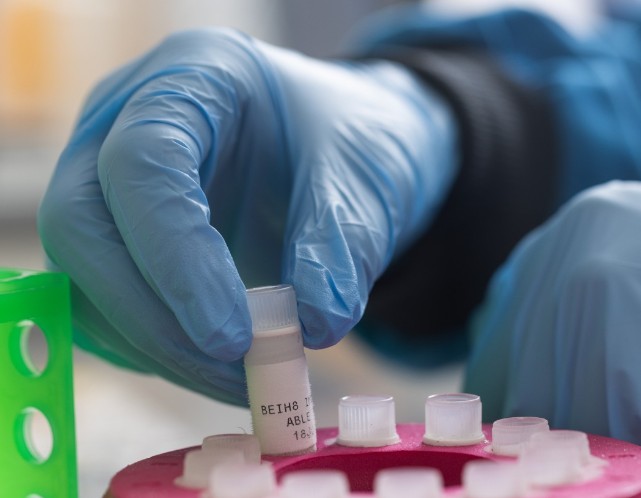
The company has pioneered the production of pluripotent stem cells which can renew themselves forever and also develop into any tissue in an animal body, including muscle and fat. Its portfolio of cells covers beef, pork and lamb, with seafood under development.
The stem cells double every 24 hours to the point that “after 60 days you have enough cells to fill an Olympics-sized swimming pool,” says Ernst van Orsouw, CEO. “You can use that exponential growth to your advantage to dramatically accelerate the production of meat in bioreactors.”
Cultivated meat is seen as important source of protein that can meet world demand. It has benefits for animal welfare, does less environmental damage than livestock rearing, and doesn’t use antibiotics. But the high costs of producing cultivated meat remain a barrier. The first burger produced from cultivated meat in 2013 cost $300,000. Costs have come down but are still high at around $1,000 per kilogram. Orsouw says his company can bring the costs down much lower.
“We have a very clear line of sight to bring that to $10 per kilogram over the next couple of years. That is what’s needed to make this technology viable,” he says.
The company targets large food producers for its stem cells. It charges a royalty for every sausage or burger steak they produce. It also sells biomass created from the stem cells to companies that are not specialists in biotechnology.
Another source of growth for the company is using its stem cells for animal health. Cell therapies are emerging for treating dogs, cats and horses for ailments such as osteoarthritis and kidney disease.
In 2022, the company raised £11m in a series A round led by Novo Holdings, the Danish life sciences investor. This built on funds received in 2021 and 2022 from Scottish Enterprise and existing shareholders, including the University of Edinburgh’s venture capital fund, Old College Capital. Nutreco, a Dutch maker and supplier of animal feed, is a corporate backer. Venture capital firms Future Planet Capital and Kairos Capital Group are also investors.
Roslin Technologies is in the final stages of raising between £10m and £15m to fund its next phase of growth. CEO Orsouw welcomes corporate investors because of their longer-term investment horizons.
“Even though we have significantly derisked the technology, the timelines are still quite long before you see cultivated meat in mass quantities on the market. You’re talking early 2030s. For normal venture capital firms that is a fairly long timeline,” says Orsouw.
“We have been talking to other strategic investors, which we look to really make this technology work,” he says.
Literal Labs, University of Newcastle
The large amount of energy required to power AI has the industry scrambling for more energy efficient large language models. This spinout from the University of Newcastle has an answer to the problem with its logic-based techniques to generate AI models which it claims are much faster and use much less energy than today’s neural networks.
The company’s machine learning approach uses a combination of propositional logic, binarisation and Tsetlin machines, a field of machine learning algorithms, to run AI outputs that it says use 52 times less energy than neural networks. Its technology also makes AI inference, the process in which models make conclusions based on unseen data, up to 250 times faster than market competitors.
Its AI can run on the edge and is not dependent on cloud connectivity and data centres.
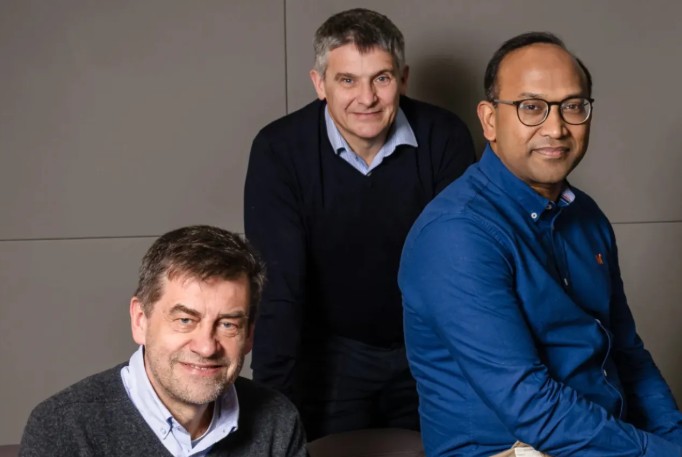
The company was spun out of the University of Newcastle, in the north of England, by logic-based AI experts Alex Yakovlev, Rashid Shafik and venture builder Cambridge Future Tech in 2023. Noel Hurley, who spent more than 20 years at UK chip designer Arm, was appointed CEO that same year.
In May this year, it raised £4.6m in pre-seed funding led by UK university spinout investor Northern Gritstone and venture capital fund Mercuri. Sure Valley Ventures and Cambridge Future Tech also invest.
Pazul, Cranfield University

Water pollution resulting from underinvestment in sewerage infrastructure is a growing problem in the UK. Pazul, a developer of advanced sensor technology for detecting water pollutants, offers a monitoring solution that could gain market traction given the increased focus on the issue.
Spun out of Cranfield University, the UK’s only academic institution for solely postgraduate study, the Pazul team has developed an electrochemical phosphate sensor and online monitoring system which requires no chemicals and gives rapid results within two to four minutes. The samples require no filtration or preparation, making it a cheaper technology than today’s methods of detecting phosphates, a pollutant in high concentrations.
The technology can be used to monitor river water quality, discharge performance of wastewater treatment plants, and feedstocks used in industries such as food, beverages, dairy and metal processing.
Pazul, founded in 2024, has not yet raised venture capital funding.
Dew Point Systems, University of Hull
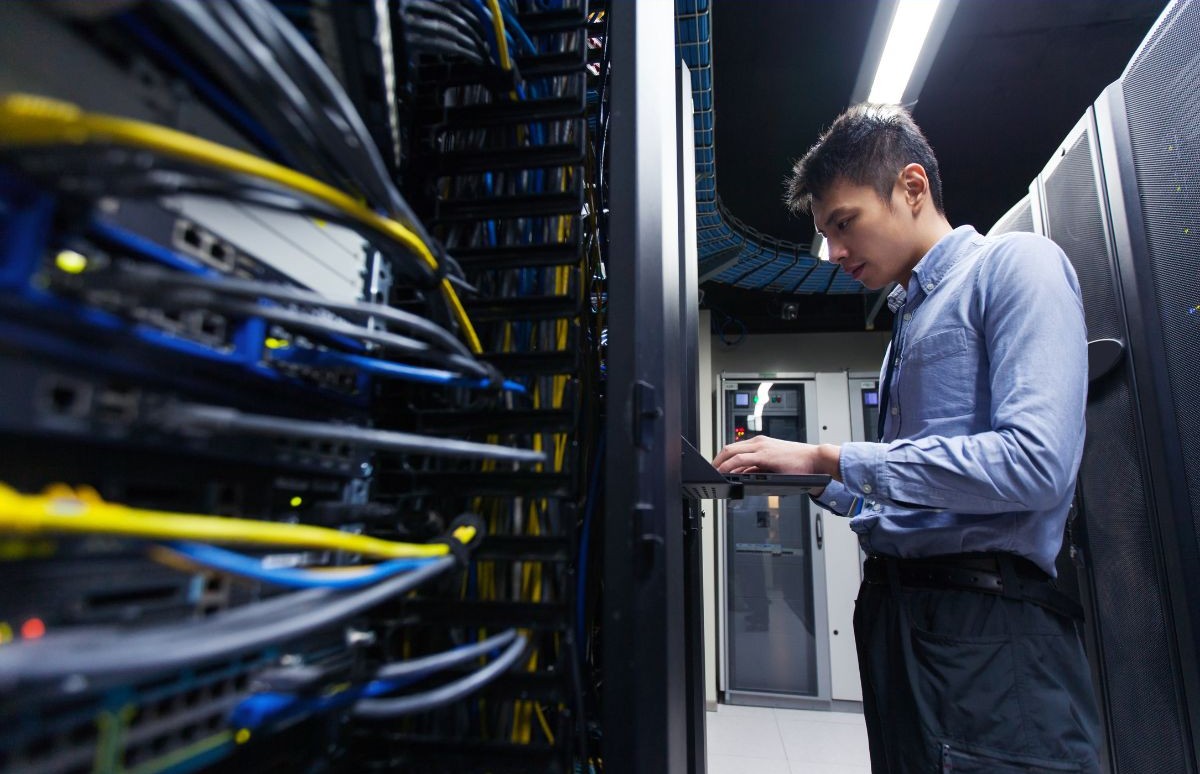
This spinout from the University of Hull provides a cooling systems technology that can reduce the costs and environmental impact of running data centres. Dew Point Systems’ evaporative cooling technology lowers air temperature down to the dew point. This kind of evaporative cooling can deliver non-humidified air below the wet bulb temperature, the lowest that can be achieved through the evaporation of water. The technology uses less water than traditional methods.
A research team at the University of Hull has built a 100kW dew point cooler that has shown a coefficient of performance, a measure of the efficiency of heating and cooling systems, of up to 30, compared with the industry standard of just 2 to 3, according to Cambridge Future Tech, a venture builder that is helping to commercialise the technology.
The technology has been tested out at Hull City Council’s data centre, saving the council thousands of pounds in electricity costs and reducing its carbon footprint, according to DatacentreDynamics.