University funds have been proven to increase the rate of spinout creation, and many institutions, especially in Asia, are setting them up to help accelerate commercialisation of their research.

Last year marked a flurry of new funds set up to invest in spinouts, as universities seek to fill the funding gaps in pre-seed financing for early-stage academic-based startups.
Several Asian universities in particular formed funds this year, many with the aim of tapping international venture capital to support their spinouts.
Funds were also launched to support startups in the arts and design fields, an underfunded area of academic research that has applications in a diverse array of sectors such as healthcare, logistics and manufacturing.
University funds are proven to increase the rate of spinout creation, and many universities have chosen to set up their own internal funds or to partner with outside VC firms to start investment vehicles. Global University Venturing tracks university venture funds globally in this comprehensive online list.
Here are a selection of notable funds launched in 2026.
NTU Ventures, National Taiwan University

National Taiwan University, the island nation’s oldest university, set up a $30m fund to invest in startups founded by its alumni, as well as student-led startups and spinouts.
Most of its capital – $21m – comes from alumni of the university. It is raising the rest from the Taiwanese government. The university chose to tap its global network of alumni to raise money for a fund after the Taiwanese government deemed it too risky for the university to provide its own capital for VC investment.
NTU Ventures head Brandon Chiang (pictured) said the largest portion of the fund’s capital will be invested in startups founded by alumni as these companies offer the highest likelihood of financial returns. He expects to invest between 20% and 30% of the fund’s capital in early-stage deals including spinouts. While this is a smaller portion of its capital, it will likely account for between 50% and 60% of its deal flow.
The public research university also hopes to boost entrepreneurialism through the launch of the fund as many of its talented graduates leave to work in large corporations that dominate Taiwan’s economy, such as semiconductor maker TMSC, rather than start their own businesses.
The fund’s first investment is in Tron Future Tech, a Taiwanese anti-drone defence tech startup whose chief technology officer, Borching Su, is an associate professor at National Taiwan University.
RCA Design & Innovation Investment Fund, Royal College of Art, UK

London-based postgraduate art and design college Royal College of Art stood out this year for launching a fund to invest in design-led spinouts, an unusual step given that most spinout funds invest in deep tech and life sciences.
Managed by external investor Infinity Asset Management, the £2m ($2.7m) fund invests in design-led companies in a diverse range of sectors including medtech and cleantech.
The university is a cornerstone investor, with high net-worth individuals and family offices also investing.
The Royal College of Art has already backed more than 90 ventures through its incubator, InnovationRCA. These companies have gone on to raise more than £150m ($197m) from investors.
The college chose to launch a fund after finding that it could take several years for its startups to receive investment after the college’s initial cheque. The fund can fill in this investment gap, giving companies a 12-to 18 months cash runway to develop their ideas, says Tom Pedrick, investment manager at InnovationRCA.
“In terms of our fundraising journey, we have been able to demonstrate that there is value in investing in design-led companies, particularly from a financial return point of view,” says Pedrick.
When the college first started investing in design-led companies, it had its “work cut out to demonstrate that actually it is worth investing in these companies,” says Nadia Danhash, director of InnovationRCA.
One of the first companies it backed was Concrete Canvas, a manufacturer of a technology that allows concrete to be used on a roll, saving on emissions, waste and pollution. The UK-based company now exports its products internationally.
“The companies we back are design-led but they are often design-led engineering, design-led materials, design-led medtech. We’ve got agritech in there. We would argue that there is deep tech in there and they are solving real problems,” says Danhash.
The fund has invested in 10 companies so far. These include BlueNose, a spinout developing AI-driven aerodynamic retrofits on cargo ships to reduce air-drag; Ponda, a biomaterials company transforming wetland plants grown in regenerated peatlands into next-gen textiles for the fashion industry; and Revive Innovations, a medtech spinout developing a miniaturised auto-injector product.
SPARK Innovation fund, King’s College London, UK

King’s College London was another UK university that formed a fund to support researchers spinning out companies in the arts and humanities fields.
The SPARK Innovation fund provides seed funding to researchers from the so-called SHAPE disciplines of social sciences, arts and humanities, business and law.
The funding boost comes as UK universities face budget cuts for arts, humanities and social sciences amid broader financial challenges facing the sector from the decline in fee income from international students.
Victoria McGuinness, SHAPE industry research partnerships manager at King’s College, says the college set up the fund after research showed appetite for SHAPE-led innovations.
“When we talk about SHAPE-led innovation, we hear a lot about social ventures, which I hope to facilitate more of, but I do believe there are also multiple commercial opportunities from SHAPE-led innovation,” says McGuinness.
Ventures that have emerged from King’s in these fields include a social venture that brings together farmers in Ghana who have small holdings into a bigger collective with the aim of creating carbon credits. This builds on research done Amanda Lenhardt, a lecturer at King’s College London, and partners including the Global Shea Alliance, a nonprofit.
Another venture was founded by researcher Arthur Galumba in social sciences who has created a digital platform, Collabits, to interact and do more collaborative working in the teaching space.
Y-Point Venture Capital Fund, Indian Institute of Technology Bombay
An incubator affiliated with the Indian Institute of Technology Bombay (IIT Bombay) launched a ₹250-crore ($28m) fund to invest in startups spun out of the Indian university.
India has a network of technical universities that spawn deep tech and life science spinouts, but like many other jurisdictions the country lacks funding that can bring academic research out of the lab into commercial ventures.

This is changing as more Indian universities set up funds. Earlier this year, the Indian Institute of Technology Madras launched a ₹200-crore fund to invest in its spinouts.
The IIT Bombay fund’s investments will focus on AI and advanced computing, advanced manufacturing, next generation materials, biotechnology, climate and clean tech, and space and defence. It will invest in pre-seed to early series A.
IIT Bombay’s incubator, the Society for Innovation and Entrepreneurship, has supported more than 250 technology ventures over the past two decades including ideaForge, Sedemac, Atomberg and ImmunoACT.
If you invest in university spinouts, we would love your input in GUV’s University Venture Funds survey.
Gain valuable insights into the performance of university-affiliated funds globally. Compare your fund’s structure and performance with your peers. Take the survey here.

The National University of Singapore
The National University of Singapore ramped up efforts to expand its creation of spinouts this year by launching a $120m fund to invest in its startups and early-stage venture funds.

The university fund will channel close to $80m into supporting its own spinouts, with the option to co-invest with VC partners. The remaining $40m will be allocated to investing in six VC funds. It has so far invested in Granite Asia, a multi-asset investment firm, and 4BIO Capital, a life sciences investor.
NUS Enterprise, the university’s technology transfer arm, also has agreements with SG Growth Capital, an investment fund of the Singapore government, and family office Lotus One Investment to jointly finance its spinouts.
Gobi-Redbird Innovation Fund, Hong Kong University of Science and Technology
Another Asian university that launched a fund this year was the Hong University of Science and Technology (HKUST).
The Gobi-Redbird Innovation Fund was formed in partnership with the government-owned Hong Kong Investment Corporation and venture capital firm Gobi Partners, which will help portfolio companies to expand their reach in several Asian markets.
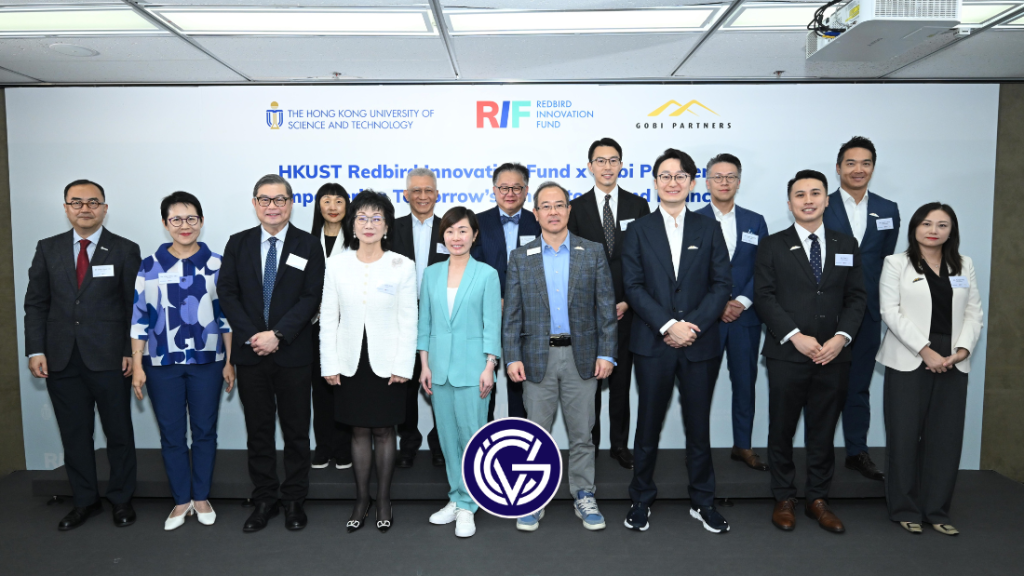
The fund will target startups in biotechnology, industry 4.0, financial technology, and artificial intelligence and robotics. The university has built a pipeline of startups including automated lawnmower producer Lymow and fabless semiconductor designer Atom Semiconductor.
The latest fund is the successor to the existing Redbird Innovation Fund, formed in April last year with HK$500m ($64m), which backs HKUST spinouts from seed to series B stage.
HKUST, the third largest university in Hong Kong, has spun out 1,900 startups, including 10 unicorns and had 17 exits through either stock market listings or mergers and acquisitions.
Future of Medicine Fund, University of California, Davis, US
The US university was one of several academic institutions in the country to launch venture funds this year. The Californian university formed a sector-specific, $25m Future of Medicine Fund to support life science and health care startups spinning out of the university.
The university plans to bring in VC investors and industrial partners to invest in the fund. It is also planning to form other sector-specific investment vehciles, including a $10m food and health investment fund.
George Baxter, chief innovation and economic development officer at UC Davis, said the university was looking at alternative sources of funding to commercialise research amid the decline in federal research and grant funding under the Trump administration.
StartUP Fund, University of Pennsylvania, US

Private, Ivy League institution University of Pennsylvania launched a $10m fund to invest in startups founded by faculty members and researchers.
The evergreen StartUP Fund is backed entirely by the university and will provide seed-stage capital to startups across the university’s research community.
The University of Pennsylvania, located in Philadelphia, ranks tenth among US universities for the number of spinouts it produces, according to AUTM 2023 data.
Harper Court Ventures Fund, University of Chicago, US
Some universities chose to partner with outside VC firms to manage their funds. This works well for non-profit academic institutions that are under restrictions from engaging in for-profit investing.
The University of Chicago chose to partner with US early-stage venture capital firm MFV Partners to launch a $25m fund backing ventures spinning out of its university.

The Harper Court Ventures Fund I invests in pre-seed and seed-stage companies based on faculty- and student-led research, as well as in companies founded by alumni.
The Silicon-Valley based fund, independently managed by MFV Partners, will invest in deep tech sectors such as quantum computing, life sciences, energy and artificial intelligence. The fund plans to back 40 startups over the next three years.
This is the first externally run venture fund for the University of Chicago. Samir Mayekar, head of the Polsky Center for Entrepreneurship and Innovation, the University of Chicago’s commercialisation arm, said that partnering with an external venture capital firm helps the university have a Silicon Valley mindset to deals.
“It is a hard job to be able to lead a round in a science-based company, to do the due diligence. University employees are just not going to be prone to doing that well, because we are not structured like a venture capital fund. We are a nonprofit at the end of the day,” said Mayekar.
Delphinus Venture Capital, Aarhus University, Denmark
Denmark’s second largest university Aarhus partnered with Danish family office Heartland and Danish corporates Norlys, an energy and telecoms company, and Salling Group, a retailer, to form an €80m ($107m) investment fund to back spinouts in east and central Denmark.
Delphinus Venture Capital is an evergreen fund that invests in pre-seed to scale-up stages. The fund’s corporate partners bring a broader, business-oriented perspective on innovation and growth, said Brian Bech Nielsen, chair of Aarhus University Research Foundation.
Another Danish university that plans to launch an investment vehicle is the Technical University of Denmark.
The university recently formed a scale-up innovation arm, DTU SkyFactory, to support startups that have the potential to scale.
Over the past several years, the university has ramped up its commercialisation efforts under CEO Mikkel Sørensen. It considers around 400 potential startups a year, and in 2024, it incorporated 120 new companies. The university ranks seventh among European universities for the number of companies it spins out, according to a Dealroom.co report.
Details of the new funding plans are not yet available, but Sorenson said the university aims to provide some capital but will also look to partner with other investors to boost the capital available.
Pre-Seed Launch Fund, University of Sydney, Australia
The University of Sydney launched a A$25m ($15m) fund in April this year. The Pre-Seed Launch fund will invest up to A$500,000 in ventures in focus areas of medical devices, novel drugs, engineering hardware, clean technologies, new materials, robotics, cybersecurity, AI, software and quantum computing.

The fund is open to university staff, students, affiliates and alums within five years of graduation.
Australia has one of the world’s most mature university investment ecosystems. More than half of the country’s universities have access to an investment fund that can help commercialise academic research.
The University of Sydney is also a partner in Uniseed, an Australian venture fund that invests in spinouts from more than a fifth of Australia’s universities. Uniseed’s new CEO, Alastair Hick, called for more streamlining of venture capital investment to accelerate dealmaking following a spurt of new funds forming in the country.