The university is looking to widen funding further by engaging with corporations and global accelerator programmes such as TechStars.
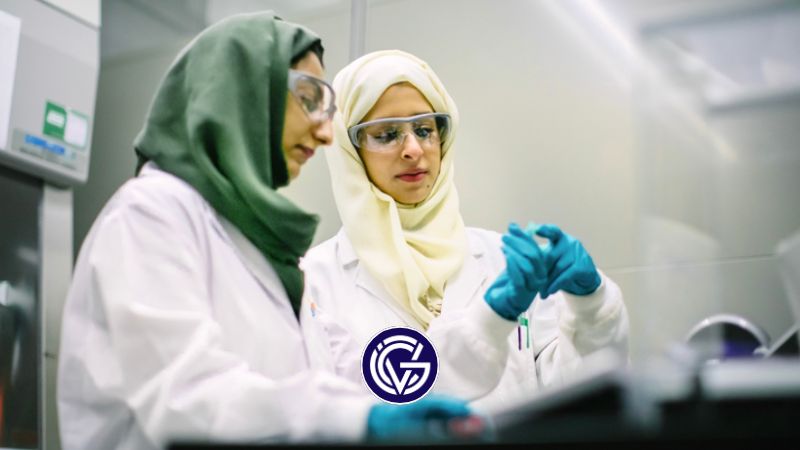
The King Abdullah University of Science and Technology (KAUST) reached a milestone late last year – its startups have raised more than $1bn from local and global investment firms.
The landmark signals a maturation of the Saudi Arabian university’s pipeline of spinouts. The postgraduate research institution, founded in 2009, has spun out close to 120 companies. Those technologies are attracting local venture capital investment as well as foreign capital as more external investors are drawn to the Middle Eastern country.
KAUST is now looking to increase the amount of external VC funding it pulls in by engaging with more global pre-seed VCs and accelerators as well as with corporate investors.
Once heavily dependent on oil and gas production, the Kingdom of Saudi Arabia’s efforts to diversify its economy as part of its Vision 2030 plan has led to a steady flow of clean energy technologies coming out of KAUST.
“The ideas that started at KAUST 15 years ago have now emerged into a pipeline of active IP that is inciting curiosity from the external world, in particular from investors that are looking to come to the kingdom and see the investments that have been made and the ambition around the projects that are in the kingdom at present,” says Ian Campbell, senior vice president of the National Transformation Institute, KAUST’s technology commercialisation arm.
KAUST has a sophisticated programme of tech transfer. It has two funds that support its startups: The KAUST Innovation Fund, managed by KAUST Innovation Ventures, is an early-stage fund that provides seed investments up to $250,000 and follow-on investments of up to $1m. Silicon Valley-based Capital K, a $200m deep tech fund, provides scale-up funding to KAUST technologies and other startups.
Clean tech focus
Many of KAUST spinouts focus on sustainability tech, a reflection of the kingdom’s economic diversification efforts. A key area of research is waste technology. A company that has emerged from this research is Terraxy, a developer of biochar made from organic waste material, which it applies to soil to improve its quality. Terraxy received investment from Wa’ed Ventures, a $500m VC fund backed by state oil company Aramco.
Another waste technology spinout is Edama, which recycles vegetative waste that is used to enhance soil fertility of arid land, doubling crop yields. It received $5.6m from the Saudi Investment Recycling Company to expand its waste recycling facilities.
KAUST spinouts also have a focus on mining and mineral resources. One of these spinouts is Lihytech, founded by a KAUST professor, which has invented a technology that integrates electrodialysis and ceramic membranes to extract lithium in a way that uses low energy and requires no additional chemicals or fresh water. The company received $6m from Saudi mining company Ma’aden. It has a partnership with Aramco, which provides brine from its oilfields to test the technology’s lithium extraction capabilities.
Other Saudi Arabia-based corporates that invest or partner with KAUST spinouts include chemicals maker Sabic and ACWA Power, an operator of power generation and water desalination plants.
In a bid to grow and diversify its funding sources, KAUST recently hosted an event at which its startups pitched to global pre-seed VCs and accelerators including TechStars, Newlab and First Star Ventures.
“They are first time entrants to the kingdom,” says Campbell. “We’re beginning to be a site where they can test some of their own accelerator programmes.”
Chinese innovation hub
The university has also looked abroad to accelerate the commercialisation of its research. It recently set up an innovation hub in Shenzhen, China, where it partners with a local incubator to do founder boot camps. The aim is to integrate Saudi Arabian startups and entrepreneurs into the Shenzhen technology and manufacturing ecosystem.
“We wanted to test the hypothesis around speed to market and see if we could get them to prototype and create companies with greater value,” says Campbell of the Shenzhen initiative. “Shenzhen is 10 times cheaper and 10 times faster than Silicon Valley, so we wanted to put that to the test.”
Some businesses created through the Shenzhen innovation hub have received investment, he says.
Going forward, the Kaust commercialisation team plans to establish what it calls a translational research hub that allows it to consider technologies from the very early stages up to technology readiness levels of six to seven, around the time when startups have demonstrated prototypes.
“We’re trying to identify those technologies that emerge with potential much earlier in that process,” he says. “We look to accelerate their development within KAUST to the point where we can de-risk them for external investment.
“We think there is more value to be had by identifying potential diamonds in the rough and spending more time polishing them before we get investors alongside,” says Campbell.