CesiumAstro has secured $470m from investors including Airbus Ventures and Woven Capital, as it aims to build out its satellite connectivity technology.
Airbus Ventures and Toyota’s Woven Capital are among the investors backing CesiumAstro, which just raised $470m to support development of its satellite connectivity technology that could eventually allow digital communication anywhere in the world.
CesiumAstro is developing advanced connectivity technology for use in space and defence that combine satellites, space-based communications equipment and advanced computing systems. The technology facilitates communication between satellites or launch vehicles and ground-based installations and airborne vehicles such as planes or drones.

The company uses an adapted form of active phased array technology, so far used mostly by large governments for functions such as military operations. It is focused on space, but the company’s chief financial officer, Ken Smith (left), says that in the future the systems could be used on the ground alongside existing modes such as cellular communication.
“You have to think of connectivity [in terms of] a multi-layer solution in the future which will include satellite connectivity as well,” he says.
“If you’re driving your car up to the mountains on a vacation and you want to be connected, you won’t have a wifi or cellular solution. That’s when a satellite could potentially come into play and make sure your car has the right updates, [not to mention] an autonomous vehicle that would need to be connected at all points in time.”
That makes the company a particular strategic bet for aerospace manufacturer Airbus, which has been a backer since it led CesiumAstro’s $12.4m series A round in 2019. It is one of several partners taking place in an Airbus project known as the UpNext SpaceRAN demonstrator, which aims to create a standard for 5G to be used in non-terrestrial networks that would hypothetically allow 5G internet to be available anywhere on Earth through orbital systems that use Airbus satellites.
Woven, the growth-stage VC arm of carmaker Toyota, is taking part in the round as a new investor. Its portfolio already includes reusable launch vehicle developer Stoke. Smith says CesiumAstro’s technology is appealing because, as more and more systems need to communicate with each other as efficiently as possible – on the roads as well as in space – new forms of communication are going to be needed as the bandwidth fills up.
“There are so many things going into space at this point that the [communication] spectrum is a natural resource, and there’s only so much of it,” he says.
“We have the product that’s going to most efficiently and effectively use that spectrum, and I think that’s what [Woven] sees. A company like Toyota, that is making 12 million cars per year, is going to need the most efficient solution to keep connectivity across all of those vehicles.”
The corporate units are part of the round’s $270m series C equity portion, which is being led by venture firm Trousdale Ventures alongside $185m in debt financing from Export-Import Bank of the United States and a $15m credit facility from JP Morgan which was secured last month.

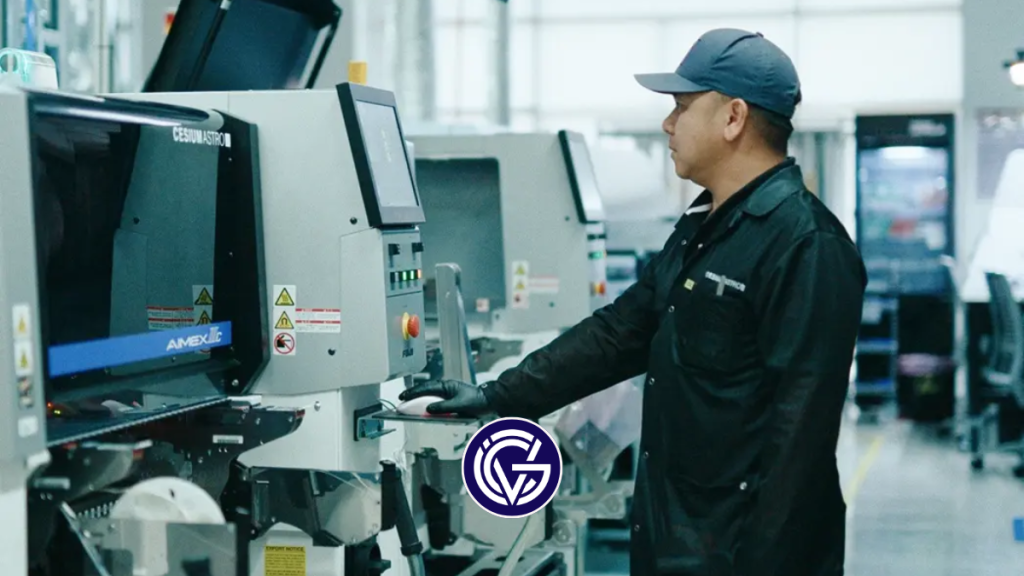
CesiumAstro builds all its equipment in-house but has only 10,000 square feet of manufacturing space. The equity portion of the round will support the expansion of its product lines, but the debt financing will allow it to build a 270,000-square-foot facility in its home state of Texas as it looks to expand production of its low-Earth-orbit satellite, Element, which incorporates its active phased array technology.
“Today, we’re working on our first satellite mission,” Smith says. “But a year or two from now, we’re going to have to start production of satellites and this facility really enables us to not only meet the demand for payloads, which is becoming larger by the day but also for the satellite product itself.”
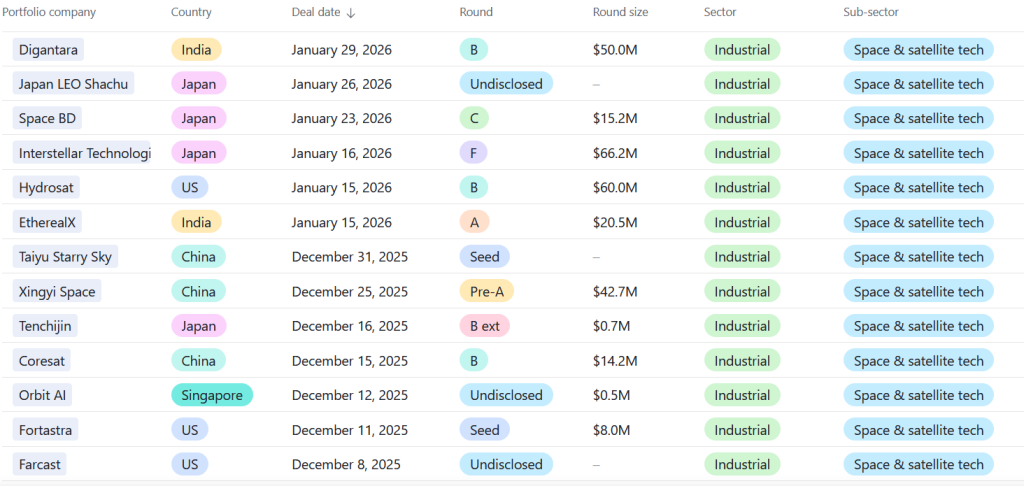
For all the most recent space tech deals, check out GCV’s CVC Funding Round Database