Corporate investors often chose to start companies after spotting a gap in the market. But do they necessarily make good startup founders?

While working at National Grid Partners in the US, the VC investment arm of the UK-headquartered utility, Ishneet Kaur was immersed in the startup ecosystem. As a director of business development she worked closely with startups to bring innovation into the parent company.
Kaur had thought about becoming an entrepreneur for some time. But it was the experience of working for a VC investor and learning what makes a successful startup investment that gave her the confidence this year to start her own company, Tattva Health, a wellbeing and holistic health company targeting C-suite executives as customers.
Her knowledge of what investors look for in startups – product market fit, ability to scale, as well as a sound business and revenue model – gave her a strong footing for starting a venture, she says.
“All the questions and conversations that I was a part of from an investor’s perspective in CVC has directly helped me to cofound Tattva Health in a way that I know it will be successful and strategically relevant,” says Kaur. “In this space of holistic health and wellbeing, where there’s so much competition out there, actually knowing how to think about a company from an investor’s perspective is serving us really well.”
For many CVC professionals, starting a company or working at a startup, becomes a natural next step. Helping startups build and scale their business serves as an impetus for many to strike out on their own.
But does working in corporate venture capital automatically make you a good fit for working in a startup or founding a company?
There are several recent examples of CVC professionals who have started companies. These include Anna Patterson, former founder and head of Google’s artificial intelligence fund, Gradient, who, earlier this year, launched Ceramic.ai, a company that solves an AI testing problem that Patterson discovered while investing in startups for the fund.
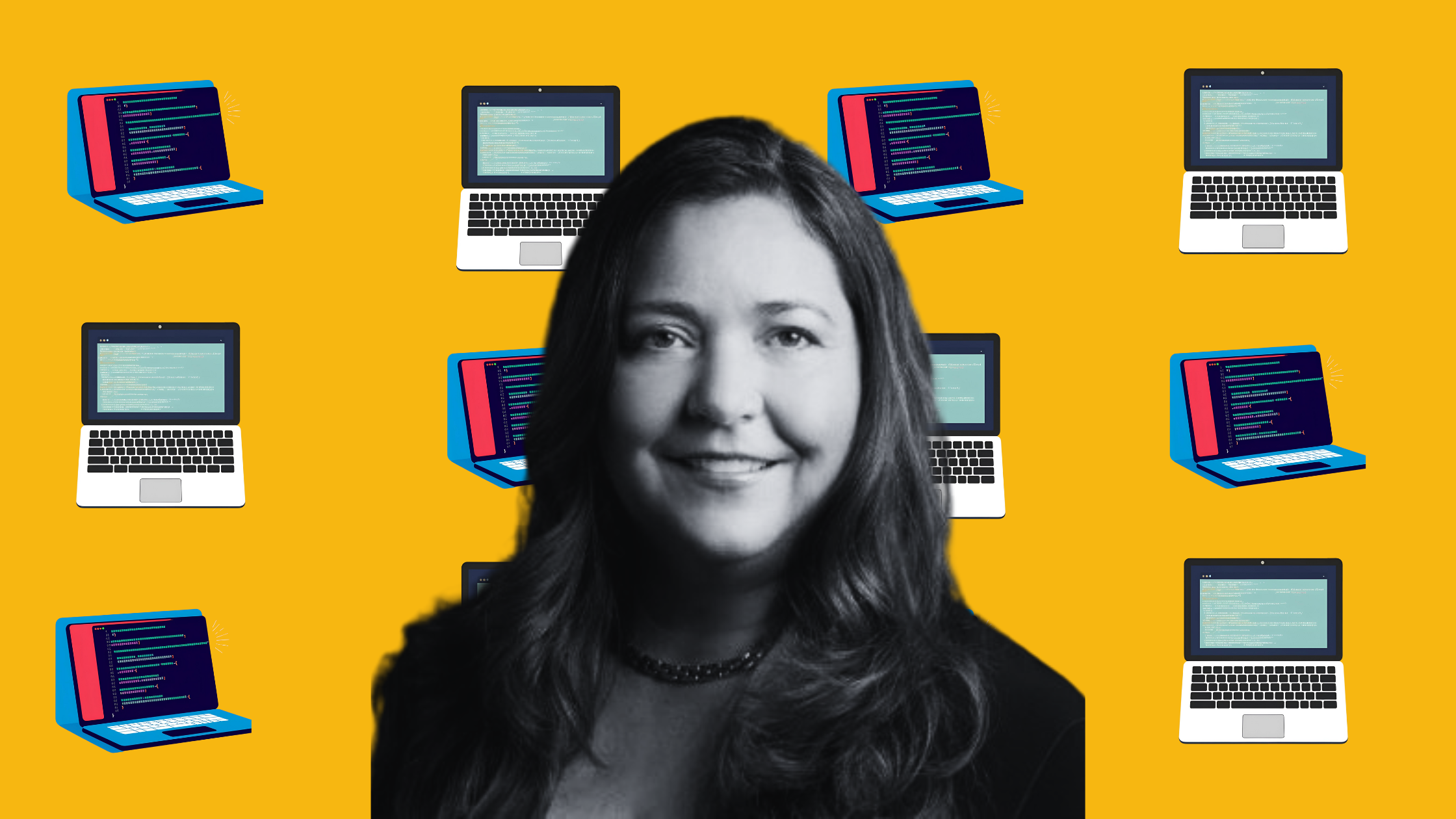
Similarly, Oliver Keown, former founder and managing director of Intuitive Ventures, the CVC arm of minimally invasive surgery company Intuitive, left the investment unit this year to start Oath Surgical, a tech-powered outpatient surgery company that serves a gap in post-operative care.
A big advantage of working in corporate investing is that CVC professionals become attuned to looking for solutions to solve actual business problems. When they don’t find a startup addressing these pain points, they have a business idea that is likely to have commercial traction from the outset. What’s more, they are also often well networked with investors for when it is time to raise funds.
Aimee Bailey, CEO of startup Rock Rabbit, an AI-powered platform for streamlining clean energy incentives, got the idea for starting the business after working for more than a decade in the utility sector. Bailey also worked at National Grid Partners as director of innovation and portfolio management before launching her business in July 2023.

“I am very much a utility person, and this is a company that’s built by utility people for utilities and governments. It was really understanding the industry and the market,” says Bailey. “I wasn’t seeing someone else step up and create a product and a company that was addressing the challenges in a way that I thought would be most impactful.”
Working in a large corporate also showed Bailey how important startups are to driving change in risk-averse industries such as the utility sector. As someone who wants to make an impact in the clean energy transition, starting a company “can be a very powerful way to drive scalable change,” she says.
Entrepreneurship is, however, a big leap for CVC investors used to the comforts of working for large companies, including stable income, retirement benefits and paid vacation time. CVC professionals who chose to start their own companies often give this up completely.
“For folks who want to start a company, you really have to be willing to take out the trash.”
Aimee Bailey, CEO of Rock Rabbit
Startup founders also need to be ready to take on lots of different roles including tasks they have never had to do working in corporate venturing. Bailey says she underappreciated how much admin and other support work that she would have to do. “For folks who want to start a company, you really have to be willing to take out the trash,” she says.
Adele Moynihan took a big pay cut when she left her job as founding member and lead investor at Bupa Ventures in Australia, to work for Hola, a telehealth startup, in August this year. Her lower salary is offset by the potential long-term incentive of equity in the company. But she is also working between 30% and 40% more hours than in her previous job.
Many of the internal services and systems of large companies just don’t exist at startups, says Moynihan. At a big corporation “you have all these fantastic functions and people with incredible expertise to lean on,” she says. “Whereas with startups, you have to self-serve, you don’t have that leverage.”
However, she says the new role as chief of staff responsible for leading the startup’s expansion into new products and markets suits her more as she is someone who enjoys the operational side of running a business.
Her job at the startup couldn’t be more different than working in CVC. At Bupa Ventures, an investment arm of the UK-headquartered healthcare company, Moynihan spent a lot of time getting key stakeholders at the corporation – legal, sales, marketing – to collaborate on helping portfolio companies. “Your job becomes stakeholder management and getting everybody aligned so you can move forward. The work I am doing now is pure execution.”
One piece of advice from Moynihan is to pick a startup carefully. The job is relentless, so it is critical to have a passion for the work. “Startups are 100% you get out what you put in, and you have to put in a lot to make them successful. If you don’t genuinely believe in the mission or have an incredible relationship and affinity with the founders, you would have a very hard time,” she says.