Set the businesses up as independent legal entities from day one, hire outside founders (and give them equity) — but make sure there are structured ways to connect back to the parent company.

More and more companies are exploring building startups themselves, alongside investing in external ventures. Though some of these new businesses may stay inside the company, becoming part of an existing business unit, there are times when the company wants to spin out the new startup, giving it an independent existence outside of the parent company.
There can be many reasons for this. It can be because the startup is one that needs to have buy-in from across an industry, and so it should not be overly dominated by a single company.
“We are looking to solve problems that we believe sole companies can’t solve on their own. We want to create ecosystems. The ventures that we create [are] not something that can be operated within PwC, and that’s why we always want them to spin out,” says João Paulo Fernandes, a venture builder and entrepreneur in residence at PwC’s German arm.

Fernandes says that circular economy solutions, for example, are ones that require participation from a maximum number of companies and work better when they are independent from PwC.
Or when a corporation wants to build a business in a completely new business area, it can be simpler and faster to do this outside and at arm’s length from the parent company.
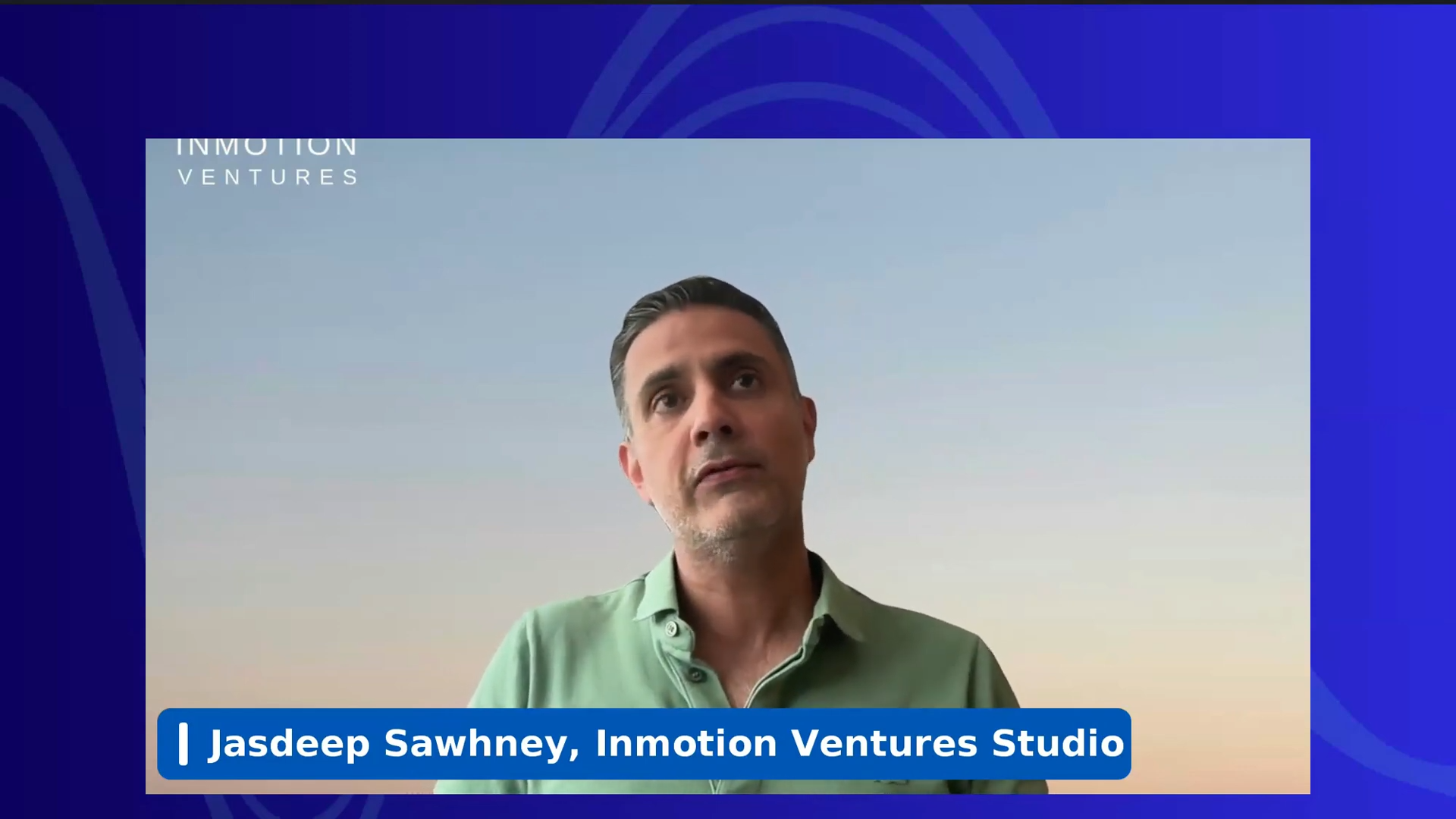
“Our mission is to build new business models for JLR. By definition, there is no natural landing place within the corporate for the new business [as] it’s a new model. The core organisation isn’t set up to run, for example, a direct to consumer business,” says Jasdeep Sawhney, who runs Jaguar Land Rover’s venture building arm, Inmotion Venture Studios.
However, building a venture to have an independent existence outside of the parent company means it must be set up carefully. Companies need to consider factors including: How should ownership be split between the parent company and the founding team? Should it be staffed by internal or external people? How will the relationship between the parent and the new venture be handled.
Sawhney and Fernandes joined Vuyo Mpako, head of Old Mutual’s Next176 venture building unit, on a GCV webinar to share their experiences of best practice. This is what we learned:
1. Ventures should be set up to spin off from the start — even when the company is not sure of the final plan
South African financial services firm Old Mutual’s Next176 unit has launched a dozen new ventures alongside its startup investments, and Mpako says it seeks opportunities to carve out ventures or get external investment from the start.

Part of that is because governance is so important in the finance and insurance industries in which Old Mutual operates, and it can be a big step to incorporate those ‘kindergarten’ level ventures, and partly because when you’re exploring venture building at scale, the expenses can mount, and so it helps to get external backing.
“Financially, if you’re doing one venture a year, a $1m loss isn’t a big deal in a big enterprise,” he says. “But when you’re doing three, four, five, the consolidation effect of those becomes a little bit of a big deal.”
Professional services firm PwC also runs a venture studio, but it operates the startups as joint ventures with specific clients, says Fernandes.
It makes sense to set ventures up as a separate legal entity, even when you aren’t sure what the final plan is for the business.
“We’re never sure right from the beginning whether this venture is going to spin in or spin out,” says Inmotion Venture Studios’ Sawhney. “But even if it does spin into the corporate, we feel it’s easier to maintain risk, acquire talent and have a have an easy separation of talent between different ventures when we incorporate a legal entity.”
Next176 recently spun one of its ventures back into Old Mutual, and its legally separate status meant that while the shareholding structure has changed, it has been able to maintain a ‘real life’ separate from the corporate, says Mpako.
“It’s a good thing to have an independent board and to actually manage it like a standalone business,” he adds.
“It creates the right level of accountability and makes sure that, in the instance the founding team stays, they still have part of that equity pool and they still have skin in the game. I certainly don’t believe there are any drawbacks in setting up that legal entity as quickly as you possibly can.”
2. When it comes to staffing, look outside for founders and inside for experts
Then there’s the question of who runs the new ventures – do you go with internal staff you already know are reliable or outsiders that can bring new ways of thinking? Sawhney says at JLR, it’s always the latter.
“We deliberately only go outside to look for talent for startups and there are a few reasons for that,” he says. “One is that a very different skill set is needed to build a startup versus being a corporate person. From the beginning, a much more risk-taking skill set and mindset is needed, and the accountability is quite different within a startup versus within a corporate.”
In fact, Sawhney adds, one of the reasons InMotion Venture Studio exists is to attract new talent into JLR. And there’s one more key reason: the difference in salary structure.
“Practically, we can’t afford to pay corporate salaries in a startup. The funding of a startup is quite low in the beginning, until it reaches some level of maturity and series A or B funding. We don’t pay corporate-level salaries, and that’s why we compensate with equity and skin in the game.”
“If you’re creating a joint venture or a venture, you need people that have been down that road and know how to scale a company from zero to 50 people, or to zero to [$5m turnover],” adds Fernandes. “They should have certain capabilities.”
PwC looks for specific skill sets in its founders: the ability to build a product, the knowledge to sell it to the market, the ability to hire well and, if the venture needs additional funding, how to fundraise and successfully approach investors.
But those people can be hard to find, especially when you also need expertise in a particular technology area. That is why PwC also looks to recruit promising founders internally, who often have a stronger grasp of how to best leverage the corporate’s assets and capabilities.
Internal people can also be a resource to tap at the beginning of the venture building process, even if they don’t actually come on board to run the startup.
“More often than not, we will bring in JLR people into the startup at the beginning,” says Sawnhey. “When the startup is just building the concept, we will bring in subject matter experts…to help us conceptualise and take it from ideation to [venture stage]. But that’s probably where it stops, because those people are not business builders, they’re subject matter experts.”
3. Most venture building programmes don’t give equity – but they should
Only 22% of venture building programmes give equity to their founders, according to GCV research. But InMotion is one of the venture studios that does. If the venture emerges out of an idea from JLR itself, or is directly strategic, InMotion typically takes 80% of the equity and reserves the other 20% in an equity pool for the founders.
“Equally, if we have a founder who is a subject matter expert who comes to us from outside JLR with a product in mind to incubate at InMotion Ventures,” Sawnhey explains.
“We are willing to then let them retain 80% of the venture and take 20% of minority stake. Over the life of that venture, we may buy in more equity as and when we feel that it becomes more strategic.”
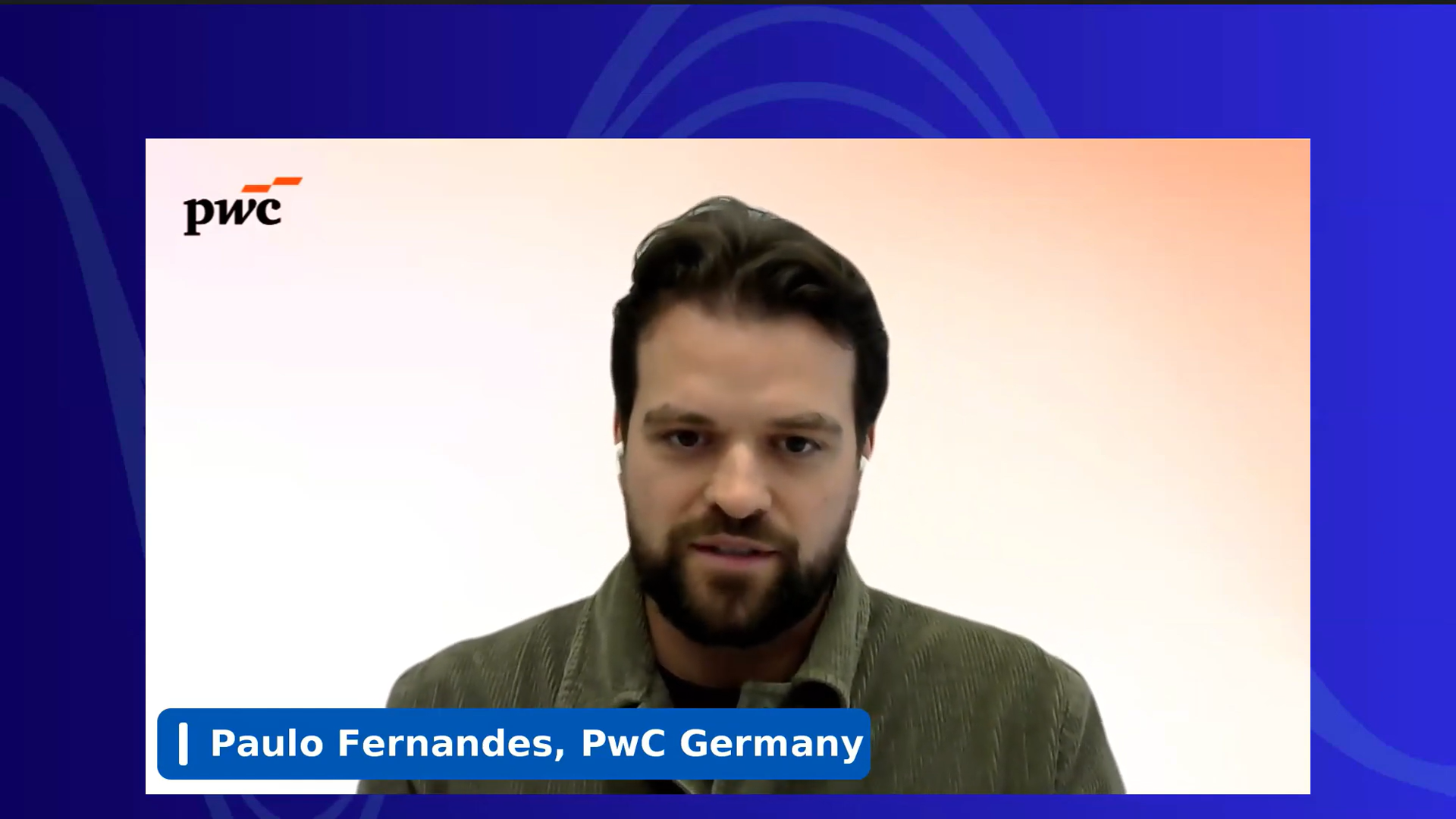
PwC decides on a case-by-case basis, says Fernandes. If the venture is going to be fully independent, PwC will typically take less than 20% of the equity, rising up to 50% – at that point, he says, you have to slap a PwC label on which is not what the corporate wants. It also depends on the business plan.
“Is the venture looking to get funds in the future? If yes, there needs to be more space on the cap table for the team. If not, and PwC and the partners give enough money to bring the company to break even, maybe the team will have less.”
Next176 generally reserves a 20% equity pool for the founders, Mpako says. Its investment committee can decide to give a founding team a larger stake if they have more than usual to add, but it needs to be something in every case, because you’re probably competing with other potential co-investors.
“Zero is not the answer,” he says. “You’re not going to get anything with zero. We started off at 20% and said: ‘we can negotiate whatever that looks like, depending on what the team brings’.”
4. It helps to get the parent company involved, even if the startups themselves are independent
More than 60% of the venture building programmes surveyed by GCV provide more than 12 months support to its ventures and almost a quarter typically give over three years. That’s a long time, which is why it’s best to get the parent company onboard as soon as possible.
For PwC, that meant putting on a kind of roadshow to sell the joint venture ecosystem concept to each business unit to make sure they knew the benefits of working with or sponsoring the ventures.
“And how we sell it to the C-suite is basically, we want a financial return. So, we are looking to have ventures that create success financially,” Fernandes adds.
“And in the end, we are a consulting firm, so we like cross-selling opportunities. We like to find new clients that we are maybe not working with today but will in the future, because they came through in through one of the ventures.”
Mpako believes the two most important factors in getting C-suite backing are making a financial return and providing strategic optionality, but it also comes down to portfolio management. If you build 10 ventures, the CFO doesn’t need to be told every time one of them fails, but you need to make sure the portfolio as a whole is moving forward.
“You’ve got to govern the thing,” he says. If you don’t have the right processes around deploying capital, if you’re not managing this with even more rigour than your core businesses, you’re going to fail.”
Sawhney says that if you don’t have buy-in from a top executive at the company, a CEO of CFO, it’s an uphill battle. But it’s important for them to recognise that benefits don’t just come from financial returns.
“We are here to inform JLR where to go in terms of enterprise strategy, but also where not to go, and that information is also quite valuable,” he says. You need to show you can build a successful business when you succeed, but also that you can provide useful strategic information when you don’t.
“It helps if you’re in an industry that’s going through a lot of change,” concludes Sawhney. “If, in the automotive industry, there are so many changes happening at the same time, that’s when the board sits up and says: ‘Let’s use this as a tool to try to venture into areas where we think we may need to put more capital in the future and invest heavily in the future.’
“In an industry that’s going through major change, like the automotive industry, that makes selling the corporate venturing model easier.”
Watch the webinar in full below:
This webinar is part of GCV’s The Next Wave series of webinars. We run a webinar every month, alternating between advice for CVC practitioners and deep dives into specific investment areas. The Next Wave will return in August.
In the meantime, on July 23rd, 2025, GCV’s Energy Council will be hosting a roundtable-style webinar exploring how the AI and energy sectors are growing in tandem. Click here to secure a spot and join the discussion.