The Palo Alto-based AI company is developing superagents that it believes will fundamentally shift how everyone interacts with work.
Humans are tool-using animals, or so the saying goes. Now a Palo Alto-based startup, Genspark AI, aims to challenge that long-held truism, at least for the one billion-plus knowledge workers whose daily work lives consist of managing dozens of different software tools, from Slack to Salesforce and Microsoft Office 365.
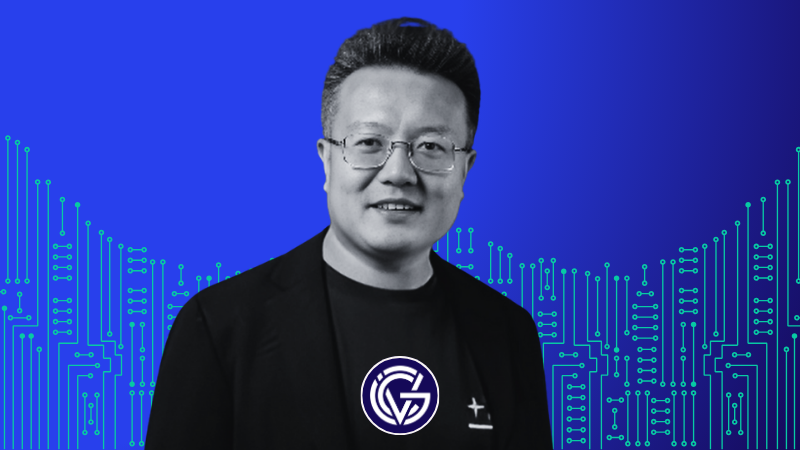
“We see a fundamental shift in how everyone is going to interact with work,” says Wen Sang, Genspark’s cofounder and chief operating officer (pictured, above). In November the company launched an AI for business “superagent” that automates entire workflows, raising the bar on AI assistants that automate one task at a time.
The launch came as Genspark closed a $275 million series B financing round at a $1.25 billion valuation, backed by corporate investors including South Korea’s LG Technology Ventures and Japan’s SBI Investments, a venture capital firm backed by corporations including Sumitomo Mitsui Banking Corporation, Nippon Life Insurance and SoftBank. The funding round vaulted the startup into coveted unicorn status, putting the team in a position to compete with legacy AI platforms such as Microsoft Copilot and Google Gemini.
Today’s white-collar employees spend 80% of their time on busy work, says Sang, tweaking Excel formulas, fixing logos on slides, and more recently, juggling an array of AI agents and assistants to generate a finished work product.
Improving on that siloed approach, Genspark’s end-to-end platform executes multi-step processes with a single prompt. The superagent suite selects and orchestrates from more than 30 models, including OpenAI, Anthropic, Google, along with open-source models, and integrates with hundreds of work tools and data sets to deliver everything from financial reports to pitch decks, full stack web applications, mobile apps and more.
“You command our superagent, and then the superagent figures out how to use all the tools to get the work done for you,” Sang says, in the process freeing up employees to spend more time on creative and strategic tasks.
“We want everyone to work like Jamie Dimon,” remarks Sang, referring to the CEO of JP Morgan Chase. “He tells people what he wants,” then decides if the product meets the desired outcome. “We want that for everybody.”
Riding the AI wave
Founded in 2023, Genspark got its start building a personalised AI search engine but shifted gears as AI reasoning capabilities improved dramatically, according to Sang. Within five months of releasing its first product last April for individual users, the startup reached $50 million in annualised revenue and accrued approximately $700 million in corporate demand. “We just blew up,” Sang says.
Driving that growth is an unusually large founding team with decades of experience building search and AI systems at Microsoft, Google, Meta, YouTube and Pinterest. Cofounder and CEO Eric Jing was a founding member of Microsoft Bing. Kay Zhu, another cofounder, pioneered AI-powered search ranking technologies at Google in 2011, launching the world’s first deep neural network ranking model in production search in 2013. Sang himself previously founded and exited Smarking, a Y Combinator and Khosla Ventures-backed enterprise software-as-a-service company.
Genspark set its sights initially on individual users, including consultants, bankers, analysts and web developers. Following its latest funding round and new product launch, the team is doubling down on enterprise customers, putting in place end-to-end encryption and other security features that are table stakes for corporations and government agencies. Its customer roster includes publicly-traded real estate firms, oil and gas companies in Bogota and government agencies in Dubai.
The corporate venture backers of the recent funding round, such LG Technology Ventures, will play an important role in accelerating the company’s global expansion efforts, Sang says.
LG wields a tremendous amount of influence in Korea, one of Genspark’s top five markets. (The other four are the US, France, India and Japan.) “So there’s insights, there’s connections, there’s resources, there’s know-how” that will help Genspark understand and approach the Korean market, Sang says.
Other big Series B investors include Emergence Capital Partners, the Silicon Valley firm behind Salesforce, Zoom and Box, SBI Investment and Pavilion Capital.
Giving another boost to company’s fortunes— Genspark recently landed its first Japanese channel partner, SourceNext, a publicly-traded company that has sold hundreds of millions of dollars’ worth of Dropbox over the past decade.
An autonomous workplace
Likening today’s AI rush to the dotcom boom circa the year 2000, Sang says the technology is still in its infancy and the competitive landscape is in constant flux. “It’s the Wild West. There’s no set landscape. Everybody’s trying to release the world’s best model every day.”
But trendlines are emerging. Legacy software tools such as Google Sheets are becoming infrastructure for a new generation of AI agents, Sang says.
Additionally, the pace of innovation is so fast that incumbent software companies are inking deals with new entrants to ensure their own AI offerings remain relevant. For example, a new partnership between Genspark and Microsoft will include Genspark as part of the Microsoft 365 offering – alongside Microsoft 365 Copilot. “They want to give their clients what they need vs just using their own stuff,” Sang said.
Genspark’s target market is vast – the world of knowledge workers. As such, the company has only covered 10% of its product road map so far, according to Sang. In addition to adding more areas of work through product innovation, the team is engaging with user communities about the solution as well as the radical change in the nature of work that companies like Genspark portend.
Genspark’s superagent puts work on autopilot, says Sang, meaning employees will be evaluated not by the hours they spend on the job but what they help organisations achieve. “That is a major mental shift,” he says.