CrowdStrike, AWS and Nvidia's startup accelerator just admitted its largest ever cohort, as AI transforms the shape of new cybersecurity companies.

Artificial intelligence is supercharging the cybersecurity software industry as the technology expands the number and changes the shape of its startups, says Daniel Bernard, chief business officer for cybersecurity software producer CrowdStrike.
The changes are becoming apparent at the Cybersecurity Startup Accelerator, a partnership between CrowdStrike, Amazon Web Services (AWS) and artificial intelligence giant Nvidia. The accelerator recently announced its third cohort, admitting 35 startups, up from 22 two years ago. Mirroring the activity in the market, the startups in the programme are now increasingly AI-first.

“Over the last three years, there has definitely been an evolution in the types of companies there at this early stage,” Bernard (left) says. “Last year, I would say it was more like agentic managed detection and response [solutions], and two or three years ago it was more like cloud or data security companies. There are so many more AI security companies this year.”
The AI boom means ever more applications and software products to secure against new kinds of threats. The attack surface of an enterprise is so much wider and more diverse than before, because you now need to secure devices, users, human and non-human identities, data protection and data classification. That, in turn, means more startups emerging to secure each of those areas, Bernard says.
The other side is that AI is streamlining the resources needed to launch a startup, he adds, a trend that is even more pronounced in a software-centric area like cybersecurity.
“In a lot of other markets, the startup costs are way higher,” Bernard says. “You don’t have thousands of storage startups that are manufacturing bare metal hardware. But, with AI coming into play, you need smart people, smart agents and a medium-quality computer and you’re ready to [create] a cybersecurity startup.”
This increase in startup activity is also leading to exits. CrowdStrike has acquired two corporate-backed startups, SGNL and Seraphic Security, already this year, and enterprise software provider ServiceNow agreed to pay nearly $8bn for cybersecurity risk manager Armis last month.
However, startups are having to work harder and faster to break through, as the rapid pace of AI development is changing the concept of product-market fit in cybersecurity.
“A decade ago, you could take a couple of quarters to figure out product-market fit, and it fit for a while. [But] what fits today doesn’t fit tomorrow in the world of agentic AI.”
“Startups need to iterate so much quicker,” Bernard says. “A decade ago, you could take a couple of quarters to figure out product-market fit, and it fit for a while. [But] what fits today doesn’t fit tomorrow in the world of agentic AI, so it’s a lot harder.
“It’s easier to build a company today and to code – coding has, to some extent, largely become commoditised. However, the ability to think about new, innovative ways to solve a problem, set out a strategy and then execute is where I see the separation of inches versus miles on outcomes for these companies.
“It’s just the problem space of operating in an AI world. You still have problems to solve, but what the problems are and how you solve them are very different than they were a couple of years ago.”
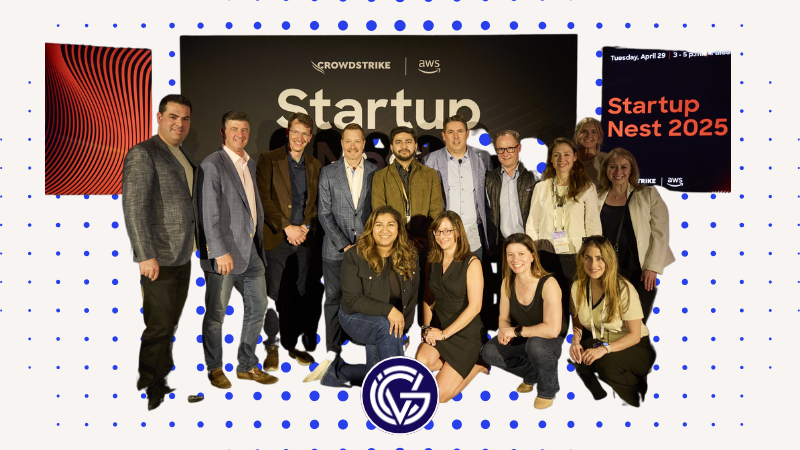
How a three-way corporate accelerator works
The Cybersecurity Startup Accelerator doesn’t take equity in its startups, Bernard says. The corporates are more interested in the chance to partner with them commercially early on, and to “give back to the community”. The participants get access to corporate expertise as well as AWS credits, fundraising support and, for five finalists, the chance to pitch at a Shark Tank-style event in March.
This kind of structure is fairly traditional for an accelerator, but these kinds of initiatives have traditionally been driven by one corporate. The Cybersecurity Startup Accelerator in fact builds on a pre-existing AWS accelerator, which had previously run programmes with themes such as space technology and social impact. Nvidia also runs Inception, its own startup partnership scheme.
But the fact the three corporations involved in the programme already cooperate with each other and represent different stages of the software supply chain gives the startup participants a chance to embed into the whole ecosystem.
“We want these companies to build on all of our technologies,” Bernard says. “When they become unicorns or they go for IPO, we want them to remember where they gathered the skills, remember the work we did to help them, and be vibrant members of all of our ecosystems.”
There is no friction between the corporation because each of them operate at different parts of the supply chain and have pre-existing commercial relationships, Bernard explains. CrowdStrike’s platform is built on AWS and its products are sold through sellers on the AWS marketplace, and Nvidia’s chips are what enables those products to work as AI agents.
“So, it all kind of fits together at a company level, and that makes it very easy for us to parlay that collaboration, our deep business partnerships and friendships with folks across the board, and the success we’ve all had together, and embed that in the startups,” he says.
“They want the next CrowdStrike to build on AWS. And Nvidia wants them to understand what AI options are available for them.”
“AWS wants these companies to be built on AWS and running on AWS from day one. They’re giving them credits to be able to be part of their startup programmes, because they want the next CrowdStrike to build on AWS and become something bigger. And Nvidia wants them to understand what AI options are available for them. More broadly, Nvidia is creating awareness and giving back on how these companies can more seamlessly and quickly use AI technologies.”
The model could also be extended to other industries. Nvidia, for instance, already invests in healthcare startups, and could potentially partner with a pharmaceutical company on an accelerator for startups working on AI drug development tools. Alternatively, a chipmaker, an electronics producer and a car manufacturer could jointly explore emerging in-car technologies.
“I think it could be expanded to many different industries,” Bernard says. “All of this came out of a meeting with AWS just three and a half years ago. AWS has a great accelerator programme, so they’re able to leverage a lot of that infrastructure, while we bring perspectives, executives and views. It’s pretty cool how it went from idea to execution in short order.”