The firm recently expanded its investments in university spinouts in the Benelux region.
French university spinout investor UI Investissement is open to new industrial corporates joining its recently launched third fund as it aims to reach a target close of €100m ($115m) by the end of the year.
The Pertinence Invest 3 fund, which has between €60m and €70m in commitments, announced its first close in February. The fund invests in environmental transition technologies, industry of the future, and health and life science spinouts from 25 universities in France and Belgium.
UI Investissement counts more than 10 industrial companies as investors in its third fund, including tyre maker Michelin, household appliance manufacturer Groupe Seb, water management company Suez, construction company Baudin-Châteauneuf and industrial group Boccard among its limited partners.
Nicolas Penet, managing partner at UI Investissement, says the fund works like an open innovation platform for its corporate LPs, where they share their industrial roadmaps and can ask for academic research that can help with pain points that they are trying to solve.
“We have many collaborations between the startups in which we invest and our corporate limited partners. Sometimes our industrial LPs say to us, I need skills, I need a lab to work on this and that. We connect them with the right lab,” says Penet.
Without the help of corporate investors, it is difficult for spinouts to grow their technologies and find commercial value, says Penet. “I call this engineer syndrome. They prefer working on the project, on the product, on the innovation. They think it’s perfect, which will never actually be perfect without knowing the reality of the industrial need.”
Before launching the new fund, the managers mapped technologies across the 25 universities it partners with, while asking its more than 30 industrial partners to list their upcoming challenges. The fund managers then developed the investment areas based on that feedback.
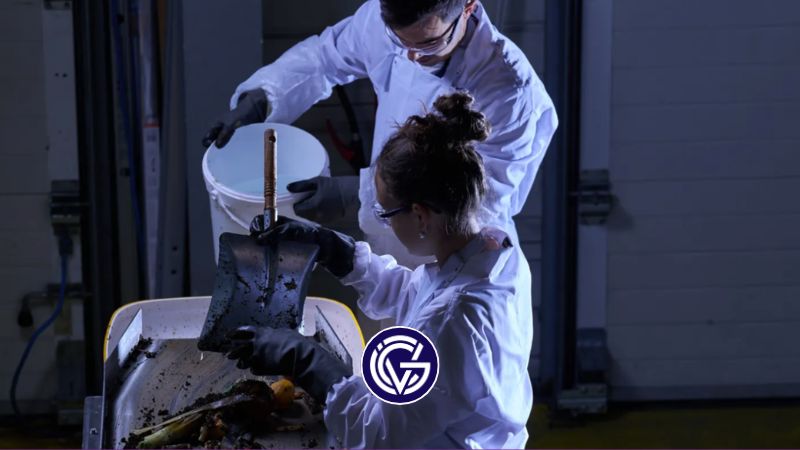
Portfolio companies in the third fund include Eclore Actuators, a specialist in the industrial folding of polymers for use in industrial robotics, defence and space; Coille, a chemical recycling technology for plastics; and Dionymer, a bacterial fermentation technology that transforms food biowaste into a biodegradable polymer.
Corporate LPs can use the fund to “pre-empt” disruptive technologies without having to do seed investments, which can sometimes be difficult for large industrial corporates, says Penet.
“Corporate struggle with seed: ticket sizes are too small, internal processes don’t fit, and entering too early can even hinder the startup,” he says.
The fund looks for corporate limited partners from a broad range of sectors so that individual companies do not directly compete with each other. “It’s a real collective. We have a club where we exchange on mainly scientific topics that can be hydrogen, electrification, recycling etc. We don’t want competitors around the table,” says Penet.
Corporates are critical to helping spinouts grow commercially, he says. “The key is putting the corporate, CVC and universities around the same table. It is very difficult to have scale-ups without everybody around the same table.”