Advances in photonics technology will underpin next-generation computing, telecoms, aerospace and manufacturing. Here are nine spinouts that have emerged from university labs with VC backing.

Photonics, a branch of optics, is emerging as a technology that could push forward the development of AI and quantum computing, two of the biggest focus areas for VC currently.
The manipulation of light particles, or photons, is a promising route to achieving the faster transmission and processing speeds needed by AI. It is expected to replace electronic switches in AI data centres as light moves much faster and can carry much more data than the movement of electrons.
Photonics also has applications in lidar, data storage, next-generation wireless communications, sensing, as well as underpinning the future of quantum technology.
Much of the innovation in photonics is happening in university research labs. Here is a list of nine early-stage university spinouts pioneering new uses for the technology.
Aegiq
- Founded: 2019
- Located: UK
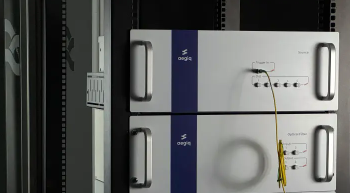
This spinout from the University of Sheffield is a full-stack photonic quantum computing company, which builds photonic microchips, hardware systems and quantum software. Its aim is to build the world’s first utility scale and commercially viable quantum computer.
The company is built on two decades of research led by professors Maurice Skolnick and Jon Heffernan from the University of Sheffield’s department of physics and astronomy, and the department of electronic and electrical engineering.
Aegiq has raised £4m ($5.4m) in seed funding. Its backers include venture capital firms 24Haymarket, Vigo Ventures, Deepbridge, Quantum Exponential, Boundary Capital and German public private VC High-Tech Gründerfonds.
MicroAlign
- Founded: 2021
- Location: Netherlands

This Eindhoven University of Technology spinout develops technology that controls the position of fibres in an array in a way that optimises the transmission of light between optical fibres and photonic chips. The technology is based on a PhD project led by Simone Cardarelli, which he started at the Eindhoven University of Technology in 2015.
Spun off from the Dutch university in 2021, the company developed a next-generation micro-actuator the following year, which uses an array of photodetectors to generate optimised optical feedback for accurate fibre alignment.
In 2024, the spinout raised €1m ($1.2m) in seed funding led by VC firms DeepTechXL and PhotonVentures. With the funding, the spinout has expanded its R&D team and facilities and market application in quantum photonic computing, data communications and AI computing.
PINC Technologies
- Founded: 2023
- Located: US
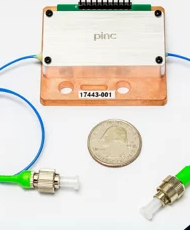
PINC Technologies, built on research from the California Institute of Technology’s Nonlinear Photonics Laboratory, builds integrated nonlinear photonic devices and circuits for quantum technologies, optical communications and industrial photonic uses.
The spinout says its technology adds a key feature that photonic chips have been missing — the ability to handle complex light signals at scale. This makes the chips more useful for many applications, including biomedical devices, atomic clocks, lidar, and precision measurement tools.
PINC Technologies added to its seed round in October 2025, bringing its total funding to $6.8m. Investors include VC funds Quantonation, Wilson Hill Ventures, Freeflow Ventures, Qubits Ventures, Santec and the Caltech Seed Fund, an investor in spinouts from the California Institute of Technology. Hamamatsu Ventures, the corporate VC arm of Hamamatsu Photonics, a Japanese maker of optical devices, also invested.
Wave Photonics
- Founded: 2021
- Location: UK
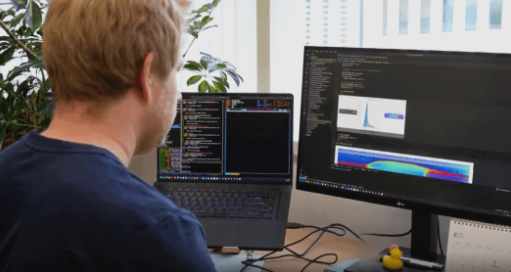
This University of Cambridge spinout has developed a computational photonics design technology with the aim of reducing the time it takes to make photonic integrated circuits. A proprietary design technology enables the company to design a custom or application-specific process design kit for any material or wavelength for customers working on data centre applications, sensing and quantum technologies.
Wave Photonics secured £4.5m in June 2024 to build out the deployment of its light-based chips. The UK Innovation & Science Seed Fund and spinout investor Cambridge Enterprise led the round. Venture capital firms Redstone and QAI Ventures’ Quantum Fund, Kyra Ventures and Deep Tech Labs participated in the fundraising.
Opsydia
- Founded: 2017
- Location: UK
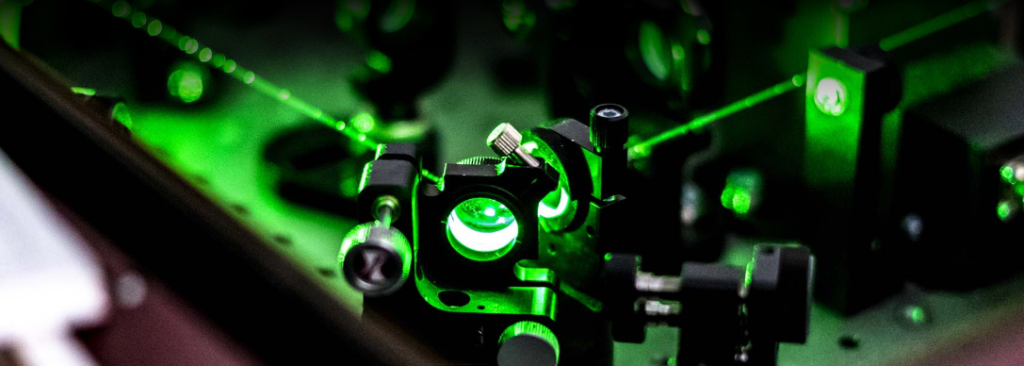
Opsydia has developed a laser-based system that can precisely and accurately create tiny optical structures, such as waveguides, with very high resolution.
The technology uses optical metrology – a method of measurement that uses light to collect data on an object’s physical characteristics. This allows for more precise written waveguides, or optical “channels” engraved on glass, which are used to move light from one place to another, and removes the need for alignment.
The company was spun out of the University of Oxford based on technology developed by professors Martin Booth and Patrick Salter.
It raised a pre-series A round of undisclosed size in July 2025, led by VCs Foresight Group and Parkwalk Advisors. The University of Oxford Innovation Fund and the University of Oxford also participated.
SPhotonix
- Founded: 2024
- Location: US
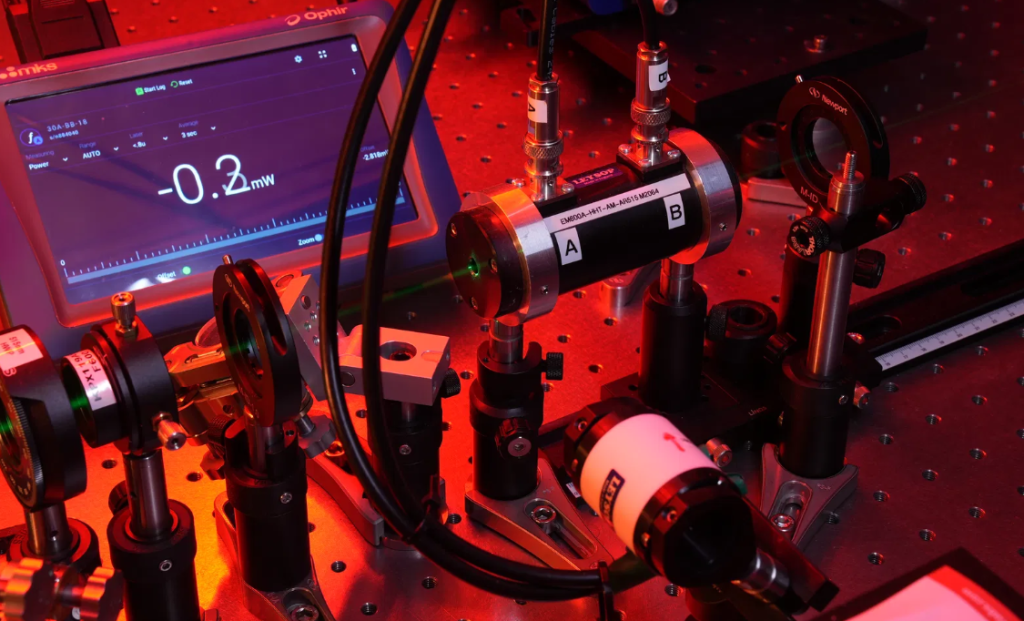
SPhotonix offers a glass-based data storage product for archiving data cheaply and with low energy. It stores data using laser nanostructuring technology archived on quartz glass. It claims it can store up to 360 terabytes of data on a 5-inch glass platter for at least 1,000 years.
The spinout from the University of Southampton in the UK also uses this nanostructuring technology to manufacture optical components that can be used in high-end microscopy, astronomy and laser applications.
The company is backed by UK spinout investor Creator Fund.
iPronics
- Founded: 2019
- Location: Spain
A spinout from the University of Valencia, iPronics has built an optical switch technology for data centres. Its product is based on waveguides, a network of programmable unit cells that route and process light signals.

It claims to reduce the time it takes to process data by tenfold and also reduces the amount of power used in current switch technology by three times.
Built on several years of academic research, it has developed a general-purpose photonic processor capable of programming high-speed light signals on-chip. The company raised €20m in a series A round in January 2025. The funding round was led by Triatomic Capital, with participation from Fine Structure Ventures, Amadeus Capital Partners, Criteria Venture Tech and Bosch Ventures, the CVC arm of appliance maker Bosch.
Singular Photonics
- Founded: 2024
- Located: UK
This spinout from the University of Edinburgh has developed image sensors based on single photon avalanche diodes (SPAD). These diodes detect weak optical signals in low light and are used in areas such as quantum optics and lidar.
The company’s sensors enable more information to be extracted from light, allowing for real-time photon counting, timing and statistical analysis.
One of its sensors, which was developed in collaboration with tech company Meta, has applications in the medical wearables sector as it can monitor cerebral blood flow at depths not possible with current sensors.
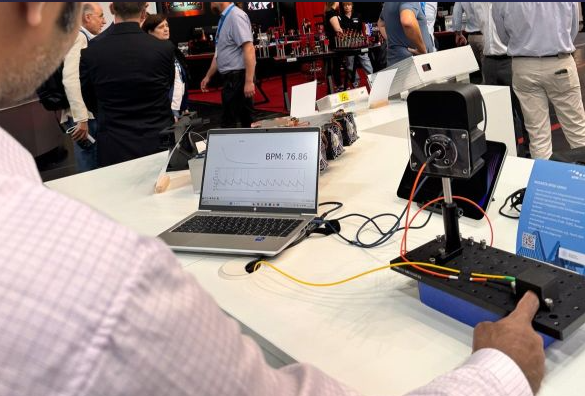
The company was formed from the University of Edinburgh’s CMOS Sensors and Systems group, led by professor Robert Henderson, who invented sensors that perform autofocus assist and which are widely used in smartphones.
Singular Photonics raised an undisclosed funding round in January 2025. Backers include Old College Capital, a VC fund that invests in University of Edinburgh spinouts, Cambridge Angels and Qubits Ventures.
Vector Photonics
- Founded: 2020
- Located: UK
The spinout from the University of Glasgow has pioneered a new kind of semiconductor laser that has applications in lidar, telecoms, aerospace, automotive and 3D printing sectors.
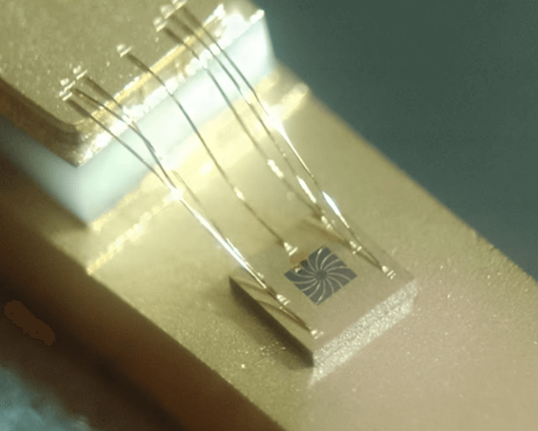
Its photonic crystal surface-emitting lasers can be built directly into circuit boards and electronic systems. They can generate light in any colour or wavelength, and the direction of the laser beam can be controlled without any moving part making them well suited for lidar and similar technologies.
Its initial focus is on data centres where its laser technology can meet high data transmission requirements.
The company raised £1.7m in equity investment in June 2024. Investors include Foresight Williams, the UK Innovation and Seed Fund, and Equity Gap, an angel investment syndicate.
If you invest in university spinouts, we would love your input in GUV’s University Venture Funds survey.
Gain valuable insights into the performance of university-affiliated funds globally. Compare your fund’s structure and performance with your peers. Take the survey here.