The TAG Alliance aims to create a way for corporate investors to access dual use technologies.

A new group of defence companies, investors, universities and government bodies aim to spin out 20 dual-use defence tech startups a year, amid a push by the UK government to increase investment in national security.
The Technology and Growth Alliance (TAG Alliance), launched last year by Ploughshare Innovations, the UK Ministry of Defence’s commercialisation company, counts defence firms BAE Systems, Helsing, Leonardo and Thales as founding members.
The alliance is positioning itself as a bridge between the defence sector and the wider economy, using spinouts to turn traditionally pure-play defence R&D into companies with civilian and commercial value.
“We are looking at bringing defence enterprise – so government, industry and academia – to a renewed commitment to each do more and drive greater exploitation of defence research and innovation,” says Hetti Barkworth-Nanton, founder of the TAG Alliance and CEO of Ploughshare Innovations.
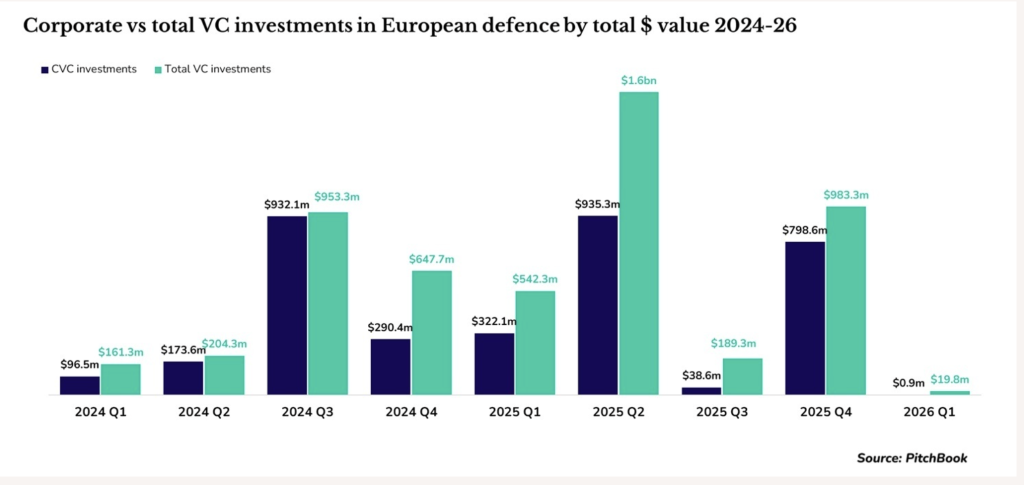
The emphasis on spinning out defence technologies comes as the UK government has pledged to meet a new Nato target to spend 5% of the UK’s GDP on national security by 2035. As part of a strategic defence review last year, the government pledged to create a “defence dividend”, using defence investment to increase economic growth, create jobs and drive investment across the country.
Despite the government spending billions of pounds a year on defence, few spinouts are created in the UK with a commercial benefit. There is an effort to change this, with BAE Systems, Europe’s largest defence contractor, recently forming an accelerator, Launchpad, to commercialise its own R&D as well as companies based on university research.

An exclusive gathering for sector innovation leaders
This intimate program in Washington, DC, brings together corporates, investors, startups, and government partners to explore specifically how energy, materials, mobility, AI, and supply chains intersect in dual-use defence.
Hosted by the GCV Defense council, and supported by the GCV Mobility, Energy, and AI councils this intimate forum provides focused discussions, curated showcases, and meaningful one-on-one connections
The UK government is prioritising several dual-use technologies including aerospace innovations that can be adapted for military and defence missions; space technologies such as dual-use earth observation systems supporting environmental and defence missions; cybersecurity; and green technologies such as clean fuels and advanced materials that improve operational resilience and sustainability.
Barkworth-Nanton says corporates outside of defence should consider joining the alliance to get a front door into technologies that they can benefit from.
“Corporate venturing organisations should look to join the alliance, because it gives them visibility into the kind of things that are being spun out of defence, which they can invest in for their own needs,” she says.
Other founding members include Cranfield University; the Defence Science and Technology Laboratory, the Ministry of Defence’s science and technology organisation; venture capital investor Future Planet Group; and accelerator IoT Tribe.
The alliance aims to officially launch operations in autumn this year.