Bosch is looking to reignite growth after several stagnant years and creating new startups through its Bosch Business Innovations unit is part of this plan.
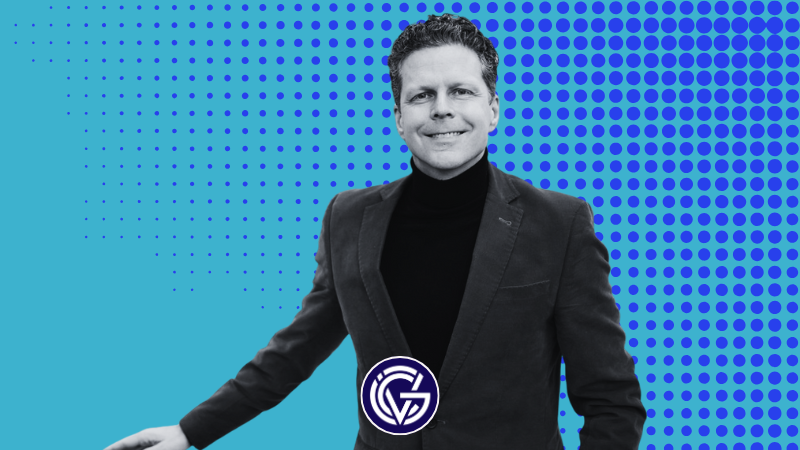
Bosch is looking to build 15 to 20 new startups by 2030, in business areas where the German technology and engineering group currently does no business.
Bosch Business Innovations, headed by Axel Deniz, is tasked with finding the best way to build these new ventures — with an initial focus on carbon capture, healthcare and software-defined manufacturing.
”My mandate is Horizon 2 to three – we call it Beyond Business – where Bosch has no assets in the sense of customer base distribution channels. It’s business that nobody does at Bosch at the moment,” says Deniz.
As a key automotive parts supplier Bosch has been hit by a slowdown in the automotive market and slower-than-expected adoption of electric vehicles and automated driving. The company has signalled, however, that it is doubling down on startups and innovation, and its venture investment arm, Bosch Ventures, launched a sixth startup investment fund with €250m in capital in May this year, focused on investing in AI and energy efficiency.
The Business Innovations team is separate from Bosch Ventures, but its ventures might also eventually be part of Bosch’s M&A pipeline.
Can you do venture building in-house? The answer is no
Having taken the helm in January 2025, Deniz’s first year has involved a lot of restructuring what had been there before – an intrapreneurship unit with mostly internal projects. Of the seven startups he inherited, two have since been sold, one shut down, two were spun in and two are in the process of being carved out with investors being sought.
One immediate realisation was that the team would have to bring in external entrepreneurs and advisors.
“We started tests to see if you could do the venture building in-house. The answer is no.”
“We only started two new projects this year, more like tests to see if you could do the venture building in-house. The answer is no,” he said. Looking ahead at next year, the goal is to begin a programme aimed at forming and then spinning out startups with external investment and in some cases in partnership with venture studios and other ecosystem partners.
The unit is working closely with Bosch’s internal R&D department to see which IP can potentially be turned into commercial ventures. Much of the technology will already be partially derisked, with at least two years of research carried out. Deniz says most projects would start with IP at technology readiness levels of between 3 and 5 – typically anywhere between an experimental proof-of-concept to stronger technological validation in relevant environments.
Deniz and his team would then bring in a founder – most likely from outside the company – for a six to 12-month programme, likely done in partnership with a venture studio partner, to develop the commercial groundwork and product-solution fit, get a prototype, commercial traction and ultimately get it ready to find investors.
Finding the right founder
Finding the right people to lead the new startups — with the right motivation — will make or break the initiative, says Deniz. The founders, says Deniz, need to love the problem themselves and they need to be in the driver’s seat.
“When I started, I was a bit hopeful that we would find entrepreneurial material at Bosch, but it’s not the case,” he says.
“ I really had some hopes because it’s an engineering company. Okay, I will not find CEOs, but I hoped to find some CTOs, especially because we are active in India, in Africa, regions where the workforce is younger, more willing to take risks, potentially has some startup experience before coming to Bosch. But in the most cases we will have both CEO and CTO coming from the outside.”
Finding the right people from within corporates to lead a venture is a well-known problem, whether that’s because of difficulty finding people with the right entrepreneurial mindset and risk appetite, or because they believe themselves to be too young or old or any of the other reasons Deniz says he could use a bingo card for because they keep coming up.
At the same time, it is not easy to find experienced external founders who are willing to build a new startup in collaboration with a corporation.
“The question is how do you get founders that are not first-timers – the second-timers or third-timers – to build with you instead of going on their own journey again. One of the main challenges is to build a founder brand,” says Deniz.
Once an external founder joins, Deniz says there will be a strong transfer management team designed to help bring the startup’s C-suite onboard and help them fall in love with the technology – a crucial step as the technology not being their baby can lead to quick rejection. This would comprise internal experts, likely the person who wrote the patent or invented the technology itself, who would not necessarily be a part of the team but potentially join as a board member or an advisory position to accompany the founder through the six-twelve-month process to make sure the tech is understood, challenged and embraced.
Ownership structures
Deniz has two archetypes in mind, depending on the technology, of how to structure a venture’s cap table.
The first is the founder-led, VC-friendly model, where the founders will have north of 70% of the company to make it work. In that case, Bosch would take a minority, make sure the IP acquisition is smooth, and take care not to overburden term sheets with clauses like rights-of-first-refusal or overpriced IP-for-equity deals.
For technologies that are further away, such as carbon capture, where a sizeable amount of capital spending is needed before the venture is ready to raise external funding, it may be more appropriate to have a different structure, something closer to a joint venture with other corporates or a university. In this case the parties may share risk and reward and the management team would still get equity, but a minority stake.
Developing the ecosystem
Part of Deniz’s challenge is creating the partnership ecosystem to make the programme a success. This includes networks of early-stage investors that could potentially back their startups, as well as universities, venture studios, co-investors and other yet-unnamed ecosystem partners that can help facilitate access to founders and other partners.
Some of these, particularly with universities – a strong potential source for both founders and complementary IP – are already well underway by virtue of longstanding partnerships with institutions like Technical University of Munich and Carnegie Mellon University.
It plans to make announcements on new ecosystem partnerships early in the new year.
“When I tell the story, everybody’s like, it sounds good. But they may be thinking you’re just a nut who is too optimistic and naive. So I can talk, yes, but I need to put my money where my mouth is.”
The entire programme will ultimately hinge, says Deniz, on the unit’s ability to actually show to potential founders and other market players that the Bosch team can actually get it done.
“Most of the time when I tell the story, everybody’s like, oh, that’s unusual, it sounds good. But they may be thinking you’re just a nut who is too optimistic and naive, and in two years you’ll be gone, and the same cliché about corporate innovation will become evident again,” he says.
“So I can talk, yes, but now I need to put my money where my mouth is, I really need to start investing next year and show proof. I believe that’s the best way to do it.”
Go deeper
Read more about other corporates experiences with venture building in our report: Corporate Venture Building 2025. This includes feedback from more than 100 corporate programmes and case studies from companies including Standard Chartered, Old Mutual, the American Heart Association, TechPetrol, ADP and more.


Fernando Moncada Rivera
Fernando Moncada Rivera is a reporter at Global Corporate Venturing and also host of the CVC Unplugged podcast.