While the full picture might be bleak with historic issues still present, investors are opening up to practical grid innovations.
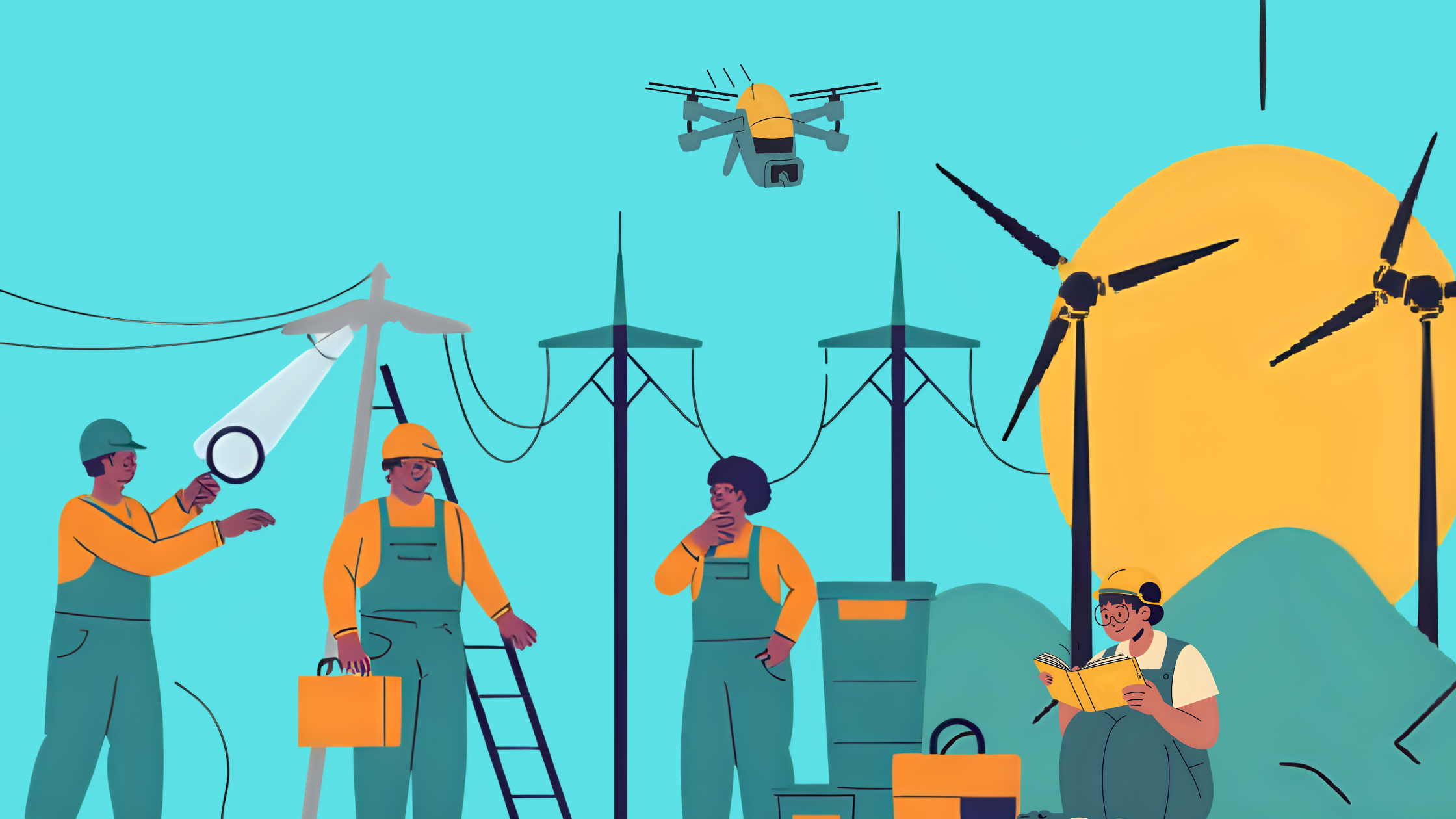
“The reality is, the grid is end of life,” Nichola Bates, head of Boeing venturing arm Aerospace Xelerated told the audience at the GCV Symposium in London in June. It makes for a startling statistic that the average age of substations in the US is between 40 and 50 years while they were designed for 20-year lifecycles.
The grid instability problem is becoming more obvious to even the general public. A substation that caught fire near Heathrow in the UK grounded flights at the airport for a day in March, causing tens of millions of dollars in losses. In April, a cascade of failures in the power grid caused blackouts throughout Spain, Portugal and parts of France.
It is only likely to get worse, says Alan Farrimond, vice president of data centre solutions at logistics services and supply chain provider Wesco. “Cascade failures are likely one of the largest problems to manage along with general grid capacity and the risks associated with large loads, like data centres, coming online.”
“This has been a huge train of thought for us,” Marc Bouchet, senior investment associate at TDK Ventures told the GCV Symposium, “I think we had this big realisation almost two years ago that the missing middle of the grid is transmission, distribution, substations and switch gear.”
Investors like Bouchet are increasingly turning their attention to technologies that can increase grid resilience. Alongside investments on the generation side with hydrogen and power-to-liquid fuel, TDK has invested in batteries and new ways for homeowners to electrify their homes and vehicles.
“The imperative is no longer just about increasing capacity — but about reconfiguring resilience, sovereignty and system value,” says Cüneyt Suheyl Ozveren, an independent electrical power systems and transmission planning consultant at OzEnergy. He says decentralised energy architectures, future-ready policy frameworks and AI should be at the core of the transformation of the energy grid.
Decentralised generation
As one key solution, Farrimond predicts that the industry will open up to other grid technologies such as “onsite generation and microgrids to both augment existing power for facilities and to enable new sites, especially where the grid is constrained or is too timely, to upgrade.”
The industry is exploring decentralised energy technologies like small modular nuclear reactors (SMR), which are gaining traction. These can be built faster and at lower cost than traditional nuclear reactors, and so are seen as a flexible way to boost the grid.
Small nuclear reactors won’t arrive straight away, however. Farrimond points out that as “regulatory compliance and permissions take time, we are still a number of years away from the first SMR being commercially deployed” and their supply chains fully developing.
In the meantime, effort is going into maintaining and shoring up the grid as much as possible. For example, XeleratedFifty has invested in a UK drone operator Sees.ai, which is partnering with UK utility National Grid to support routine inspection, monitoring and maintenance of live overhead powerlines.
As more technologies are being used to inspect critical infrastructure from robotics, IoT for grid analytics and video asset monitoring with computer vision, Farrimond suggests that all available technologies “need to be looked at” to identify a suitable match.

As another alternative, Bouchet’s team at TDK Ventures has identified advances in long duration energy storage. “For us, long duration is the next increment of revenue generating storage. So not necessarily multi-day, seasonal or intraday, but more going from four hours today, to six-eight hours, which can be very well remunerated in some grids, where you’re starting to extend the firming of grids with higher and higher solar or wind penetration,” he said.
His team is pursuing this idea with sodium-ion battery developer Peak Energy.
Another solution Farrimond sees potential in is modularisation of substations into movable platforms where self-contained substation units can be easily transported and deployed to various locations for temporary power needs or as a more permanent solution in remote areas.
A range of solutions is needed

While a clear-cut energy transition where carbon emissions are axed sounded compelling, Johann Boukhors, managing director of Engie New Ventures, the investment arm of French energy company Engie, points out that both “fossil fuels, which are highly energy intensive and easy to transport and store, and low carbon molecules, such as biomethane, hydrogen, ammonia, methanol and syngas, will bring benefits and be part of the upcoming energy mix.”
In a bid to balance the grid and prevent future unreliability, Farrimond says the decision which source to go with would be different depending on the location and use case. “Some fuel types will be better suited for baseload steady state requirements, some will ramp down better than others to minimise over-supply risks and your lights suddenly going bright, while others will have faster ramp up times to mitigate undersupply issues where lights would dim,” he says.
Policy changes
Modernising the grid will also require changes in policy, says Ozveren. Historic issues have prevented investment and tangible modernisation of the electricity system. Some of these obstacles include “market rules designed for fossil-era centralised systems, lack of coordination across energy, transport and building sectors, as well as underdeveloped flexibility markets limiting investor returns in grid-edge assets,” he says.
With the feasibility of many technologies being explored, he advises corporate investors to look out for five strategic points when evaluating grid investment opportunities — interoperability, policy alignment, grid service revenue potential, resilience and localisation (since technologies that enhance grid stability and energy sovereignty will attract strategic premiums) and responsible AI and data governance.
As the global race to modernise energy systems is not only about technology deployment but shaping power architecture for the future, “investors who align with interoperable, decentralised and ethically governed systems will lead this transformation,” Ozveren says. “For strategic capital, the path is clear: invest where AI meets equity, where infrastructure meets intelligence and where policy meets purpose.”