The war in the Gulf region has upended traditional supply chain routes for critical commodities, making the case for investment in technologies that protect against geopolitical disruption.
The severe supply chain disruptions caused by the US and Israeli attacks on Iran have put the spotlight on the underfunded area of resilience tech and its role in protecting corporations against geopolitical as well as climatic events.
Resilience tech is a broad term that includes technologies that protect businesses against climate change impacts. But it can also apply to shielding corporations against disruptions to the supply chain caused by political events such as the war in the Gulf region, which has cut off a key shipping route through the Strait of Hormuz.
Emilie Mazzacurati spotted a gap in VC funding for resilience tech when she set up investment platform Tailwind Futures in 2023. The firm invests in early-stage technologies that help corporations and communities to future-proof infrastructure, workforce and supply chains against climatic shocks. These technologies are also showing relevance in today’s geopolitical climate.
“Generally, we think of resilience in the context of climate change, but there are other disruptors. In the case of supply chain, geopolitics is very relevant,” says Mazzacurati, founding partner of Tailwind Futures. “A lot of people have a lot of pain points in supply chain right now.”
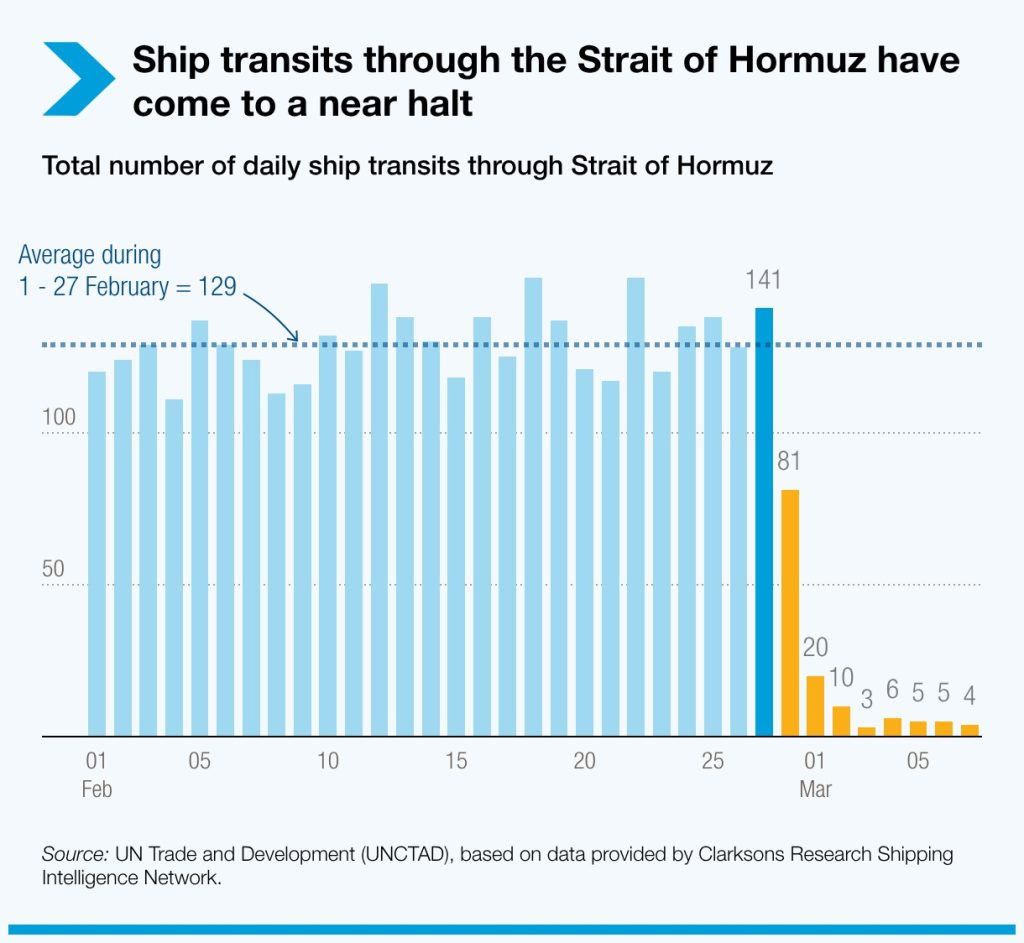
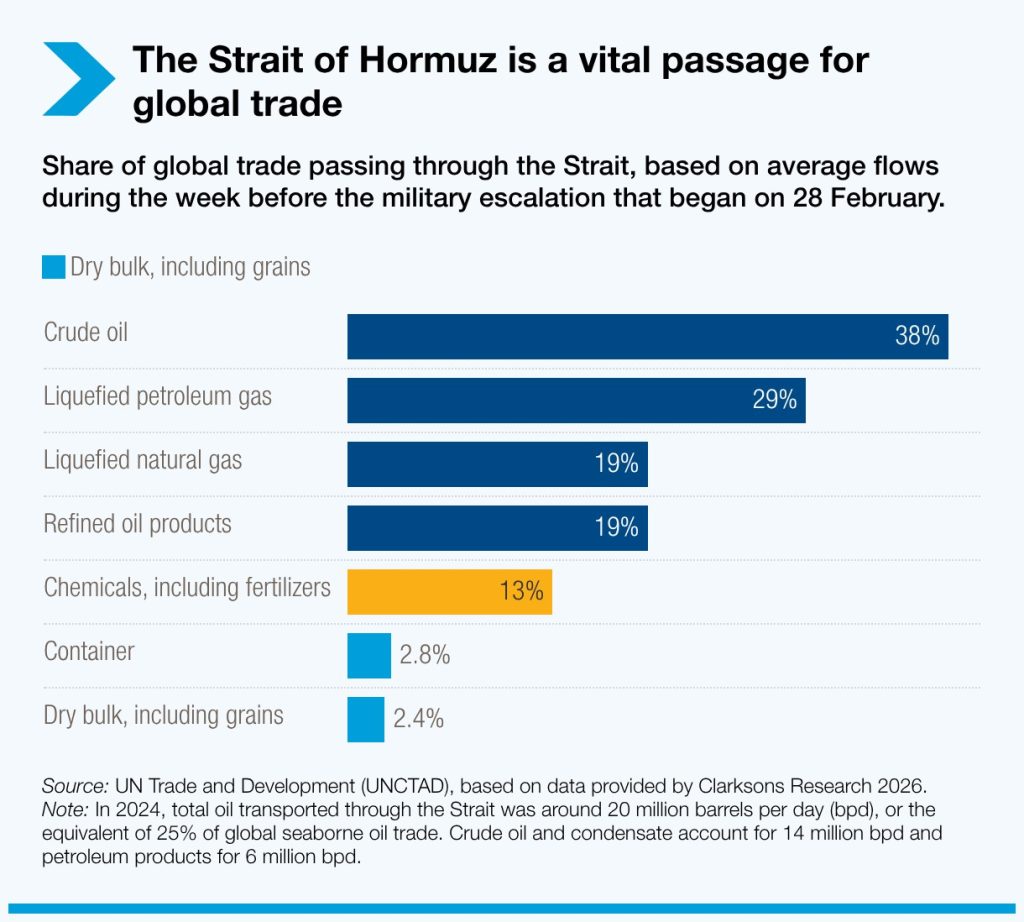
Roughly 38% of crude oil, 29% of liquified petroleum gas and 19% of the world’s supply of oil and liquefied natural gas are transported through the Strait of Hormuz, according to data compiled by Tailwind Futures. Ships transiting through the strait have come to a near halt since the war began on 28 February.
The attacks have disrupted the transportation of critical commodities such as helium, a key input in the manufacture of semiconductors. Qatar produces a third of the world’s helium – all three of the country’s helium production facilities are closed because of the war. The Gulf region is also a big supplier of aluminium, a key commodity in sectors such as automotive, aerospace and construction.
Supply chain resilience startups that Tailwind Futures is considering investing in include N4EA, a US company that builds predictive insights into how disruptions ripple through global supply chains through monitoring of vessel movements, port congestion and chokepoint conditions.
Another company it is considering is Xtrium, a startup that uses AI to advise companies on how they can switch suppliers or substitute a material used in the manufacture of a product to avoid supply chain disruptions such as a factory shutdown.
Tailwind Futures partners with corporates to support its portfolio companies. Several of the investment firm’s portfolio companies include climate risk adaptation startups, some of which have a supply chain resilience component. One of these is Dexmat, a spinout from the University of Rice, in Texas, which has developed a thread made from carbon nanotubes. The product can be used as an alternative to copper wiring.

Want to hear more from Emilie Mazzacurati?
She is speaking at the GCVI Summit in Monterey this month.
See more details about the Summit and how to join us at the event here.
A global shortage of copper has pushed up prices for the metal amid soaring demand for the material from manufacturers of electronics and EVs. “And it’s going to get worse with climate change because of water scarcity and extreme heat affecting mines,” says Mazzacurati. Dexmat’s product is very light and conductive and can be used in industries such as aerospace, drone manufacturing and automotive.
Other investee companies include Hohonu, a spinout from the University of Hawaii that makes flood sensors and operates software that monitors flood risk; Class 3 Technologies, a spinout from consulting and engineering firm Arup, which has developed a software that provides property owners with an assessment of risk that climate-driven disasters pose to buildings; and Cryogenx, a portable body cooling technology that protects against heatstroke.
Tailwind Futures invests in North American and European seed-stage technologies where the funding gap for startups is most acute. It plans to invest in between 10 and 12 startups a year with the aim of having 30 in its portfolio.