AI can help both brands and consumers create hyper-personalised and in-person experiences. But can you retain loyalty amid endless streams of AI-generated content?
Consumer-focused startups often take a back seat when it comes to corporate investing, with sectors such as IT, defence, healthcare and finance grabbing the lion's share of the funding dollars. But in 2025 there was an upward trend in large corporations backing emerging companies in the consumer sector.
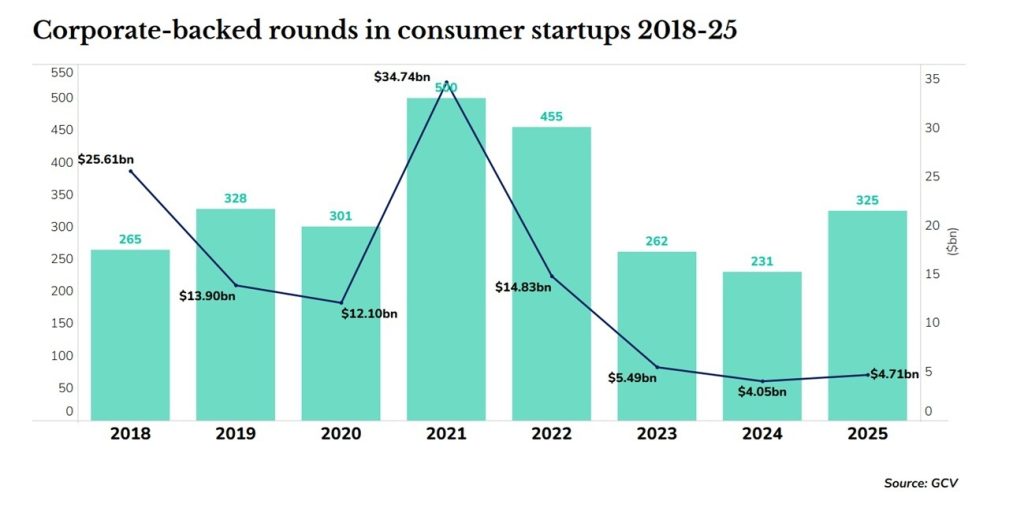
The total disclosed value of corporate-backed funding rounds in the consumer sector was $4.7bn – a slight increase from the previous year. While the amount of money invested is nowhere close to the high of 2021, the investors we spoke to appear positive about the year ahead.
Hyper-personalisation as a key trend
Sumit Keshan, managing partner at Wipro Consumer Care – Ventures, the corporate VC arm of Bengaluru-based FMCG company Wipro Consumer Care and Lighting, believes there are major changes underway that will reshape the way the consumer sector operates in the year ahead.
“There will be much sharper thinking process on the met and unmet needs of the consumer, and one will see more segmentation of consumers and better targeting and hence superior products and services and deliveries in a way to meet the personalised needs of consumers, as opposed to using the same yardstick to satisfy a broader pool with the same set of offerings.”
Though the consumer market might seem crowded at first glance, Keshan is quick to point out that there are gaps that can be found upon a deeper examination.
“These need to be identified quickly and acted upon. Hyper-personalisation is one of them.”
Lorrain de Silva, managing director of Best Nights VC, the CVC arm of German drinks maker Jägermeister, agrees. He sees this expectation for hyper-personalisation emerging across hospitality, entertainment and services in 2026 as well.
“It won’t just be about matching their vibe but specifically checking all their boxes and niche interests. Consumers want companies to understand what they want on a more granular level and enable experiences tailored to their mood, interests, location, and social context.”
From the brand point of view, this would mean significant changes in the way they communicate, how they identify new trends and consumer needs as well as a sharper dissection of consumer strata and their behaviour patterns.
"Consumers want companies to understand what they want on a more granular level and enable experiences tailored to their mood, interests, location, and social context.”
Lorrain de Silva, managing director of Best Nights VC
From the consumer point of view, hyper-personalisation could lead to there being better and more efficient ways to discover products and services along with deeper and more transparent insights into the delivery of promises from brands.
Olivier Garel, managing partner at Unilever Ventures, the venture and growth capital arm of consumer goods firm Unilever, sees this going a step further. He believes 2026 will be defined by the rise of precision wellness, i.e., a highly personalised health approach that uses an individual’s genetic, environmental and lifestyle data to create tailored strategies for preventing diseases, optimising health and improving well-being.
“Consumers increasingly see skin health, gut health, and emotional wellbeing as interconnected, and the technology to support this is maturing. AI-driven diagnostics, microbiome-based bio-actives, and practical wellbeing tools, such as scent, sound, and light technologies that help improve sleep, focus, and stress management, are beginning to work together,” states Garel.