Drone warfare and defensive surveillance needs mean startups are now essential for national autonomy, says MGF investment chief Ankit Harjai.
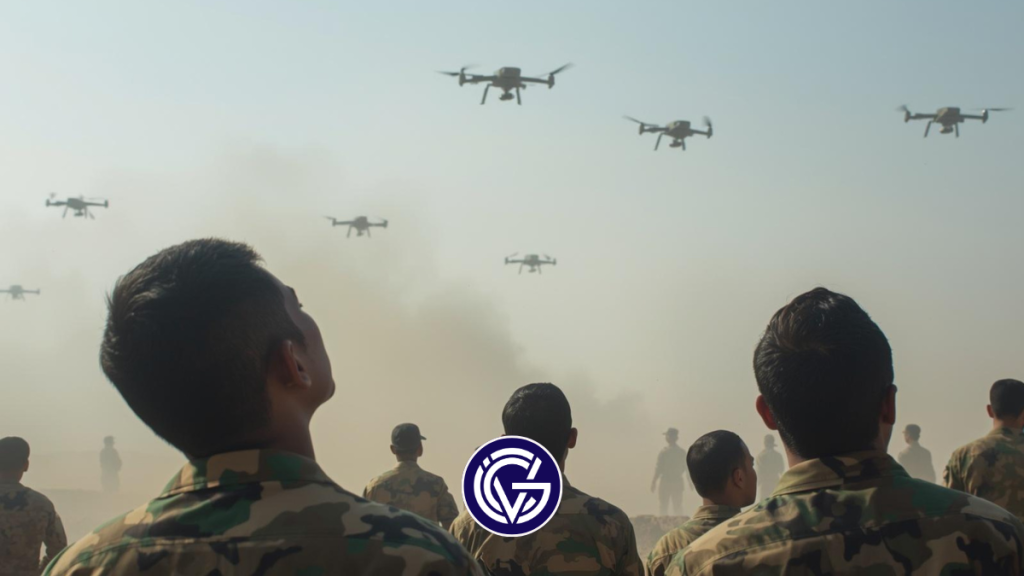
The conflict in Iran is highlighting how the rapid development of defence startups is becoming crucial for national security, says Ankit Harjai, chief investment officer (CIO) of India-based, corporate-backed venture fund MountTech Growth Fund (MGF).
Although the US and Israel have the overwhelming advantage in terms of heavy weaponry, Iran has attacked both military and infrastructure targets using automated Shahed drones which are relatively cheap. It is also increasingly using cluster bombs that scatter across a wide area, meaning they are hard to intercept, even for a country with high-tech missile prevention technology like Israel.
Drone warfare had already become ubiquitous in the Russia-Ukraine war, and Iran is showing the importance of sourcing edge technology from startups.
“There are a lot of tech advances which both nations are using, especially from the Iran side where they’re using drones and also certain applications related to cluster-based missile technology which are not readily available for most nations,” Harjai says.
“So, this is an era of modern warfare where everyone needs to upgrade themselves, especially on the innovation side. That’s why startup investments have become very critical for any nation to at least become self-sufficient [in a way that] aligns with their strategic autonomy.”
MGF invests in a blend of defence and frontier technology, and Harjai, previously head of engine producer Cummins’ venture arm, says that with security being predominantly a national matter, countries cannot rely on foreign investors to back their own defence tech industries.
India’s defence tech sector was already ramping up even before skirmishes and missile exchanges between India and Pakistan in May last year, and the country is also engaged in border disputes with China that have led to actual fighting. Harjai claims India is primarily interested in defensive technologies like satellite surveillance, anti-drone systems and advanced communications technology, such as those developed by a startup called Velmenni.
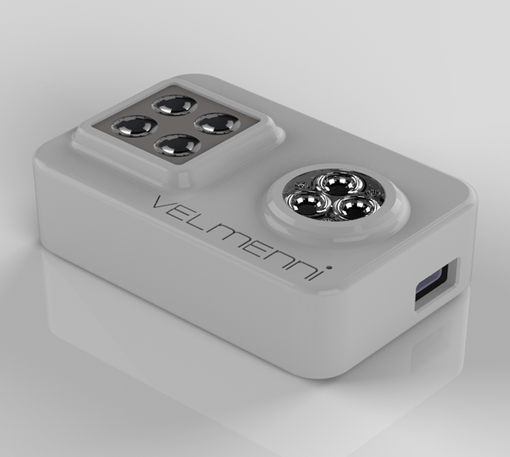
Velmenni raised just over $3m from investors including MGF last month, as it looks to further develop its light-fibre communication systems. The company is already selling its technology to international telecoms players like AT&T in the US and Hatch in Sri Lanka for home use, but in India it is being used as an alternative to the radio frequency (RF)-based systems traditionally used by militaries.
“Most of the communication happening within the military depends on RF radios. But these RF radios are generally hackable and they are easily detected by enemy states in the border areas, because RF tracking is very easy to do with a lot of devices these days,” Harjai explains.
“The army is slowly realising that information, especially in the border areas where whatever information is being passed on to the last man standing on the border, needs to be concealed and kept very secretive. That is why this kind of system is becoming more prominent.”
Velmenni is one of a new wave of modern Indian defence startups, says Harjai, a group that also includes satellite imagery provider GalaxEye, underwater drone detection specialist Coratia, laser-based anti-drone weapon developer Olee.space and EON Space Labs, which is working on advanced imaging systems for drones and satellites. He believes this blend of surveillance and drone-related technologies are going to see a significant uptick in funding post-Iran.

As Iran war breaks supply chains investors look for “resilience tech”
The war in the Gulf region has upended traditional supply chain routes for critical commodities, making the case for investment in technologies that protect against geopolitical disruption.
Corporates are dipping their toes into defence tech through venture funds
MGF is currently raising its first fund and has so far secured about $50m of a final close that could reach $90m. Its limited partners include government and institutional investors but also several Indian corporates.
Graphite India, a battery cathode and anode manufacturer that wants to ensure a secure supply chain for its components and which is interested in advanced materials startups MGF might fund, has supplied about $3m, and has been joined by conduit iron pipe manufacturer Electrosteel Castings. Cyient, an IT and technology producer that is diversifying into semiconductors and geospatial technology, is backing the fund together with its electronics and mechanical manufacturing-focused subsidiary, Cyient DLM.
“We plan to add a few more LPs which are focused on defence and aerospace. There are advanced conversations which we are trying to mature and take forward,” says Harjai. “We are trying to target mid-to-large size Indian businesses, depending on how comfortable they are towards defence as a theme and how they are looking at the Indian defence market going forward.”

An exclusive gathering for sector innovation leaders
This intimate program in Washington, DC, brings together corporates, investors, startups, and government partners to explore specifically how energy, materials, mobility, AI, and supply chains intersect in dual-use defence.
Hosted by the GCV Defense council, and supported by the GCV Mobility, Energy, and AI councils this intimate forum provides focused discussions, curated showcases, and meaningful one-on-one connections
India has a few large defence contractors, including Mahindra, Bharat Forge, MKU Systems and Solar Industries, but Harjai says the larger players generally have not got external investment strategies in place.
“On the corporate investment side, the funds that have become an LP for us have created their strategies and [know] why they want to invest in defence. That’s why they gave us the money [in addition to] their corporate allocation,” he says.
“But some of the larger houses are still trying to think through the idea and build out what they want to do with external funds going forward. That is something which is maturing at this point in time.”
Although its pitch is very much as an India-centred investor, MGF does not rule out taking on foreign backers as LPs. It was in serious talks with a Tokyo-based corporate that is interested in putting money into defence tech, particularly in India, Harjai says, and while the larger defence tech funds, such as the Nato Innovation Fund, In-Q-Tel and DTCP’s Project Liberty, were formed along the lines of national needs or strategic alliances, increasing corporate VC interest in defence technology could end up making those lines less solid.
“Global CVCs are also buying the idea that you can look at some of the other regions where the tech is being developed fast better…[and] are interested in becoming a corporate LP [in those regions]”
“Right now, the theme playing out is that sovereignty is a regional kind of play,” he says. “But what I see is a number of global CVCs are also buying the idea that you can look at some of the other regions where the tech is being developed fast, like Israel, India and even Japan. And some of the LPs in the US or EU are interested in becoming a corporate LP [in those regions] going forward.”
India, however, is well equipped to move forward with defence tech development regardless, Harjai adds, citing the country’s more than 20 Indian Institute of Technology universities and 135 private universities churning out 1.5 million engineering students a year. That is in addition to more than 50 private and publicly-listed defence technology companies and up to 2,500 startups formed in connection with the Indian government’s defence innovation agency, iDEX.
With defence becoming a higher priority worldwide, that growth shows no sign of slowing down any time soon, Harjai adds.
“Defence tech in general will remain a prominent thing for at least the next three-to-five years, until the world order becomes better going forward,” he says. “You also see it as a part of the defence spending. That used to be around 2% of the overall annual budget, and right now it has increased to almost 15% of the total central government expenditure in India.”

Indian defence startups get IPO-ready as the old geopolitical rules change
Indian drone company IdeaForge was a pioneer when it listed in 2023, but now more defence tech startups are preparing to exit as the sector’s importance increases.