Caterpillar's venture arm is targeting AI software, but full autonomy remains "a very, very long way away," says unit director Mike Mahan.
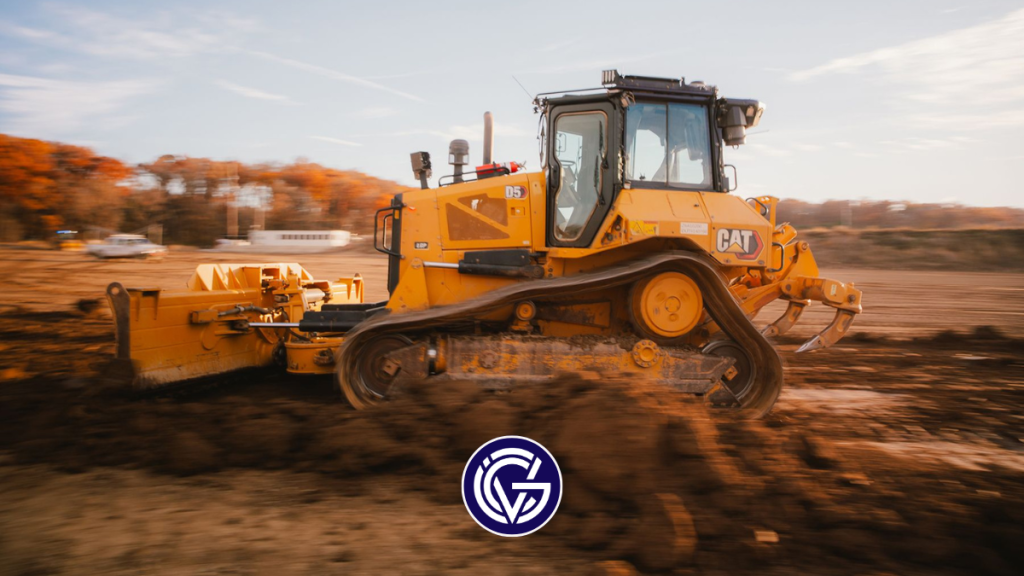
As advances in artificial intelligence supercharge the robotics sector, construction and mining vehicle maker Caterpillar is exploring the possibility of creating machines that can operate autonomously on construction sites or farms.
The goal, says Mike Mahan, director at Caterpillar’s venture investment arm, is “to tell a machine the end state we want this land to look like, and have the machines just roll out onto a site that needs clearing, grading, paving, earth moving, and just have the machines know what to do. That’s where you want to get to, but that is a very, very long way away.”
Caterpillar has, of course, already been releasing trucks and mining vehicles with autonomous features for about a decade, just as cars with heavy driver assistance have become a regular feature in the consumer sector.
Those vehicles perform relatively standard tasks, but the end goal is to create a machine that can handle custom jobs on construction sites. That will require software and chips that can process large amounts of data about the precise physical state of a site in real time, and digital twin technology that can contrast that with what it will look like when the job is complete.
Mahan says this vision is still a very long way from reality.
“Between now and then, it’s a matter of figuring out what parts of the job can be done with robots, with autonomy and AI, and trying to figure out how to weave that into how work has been done over the years. How do we start to leverage our new autonomous worker alongside all of the other workers on our job site or mine site? And how do we leverage that from a general contractor or subcontractor standpoint to most efficiently get the work done?”
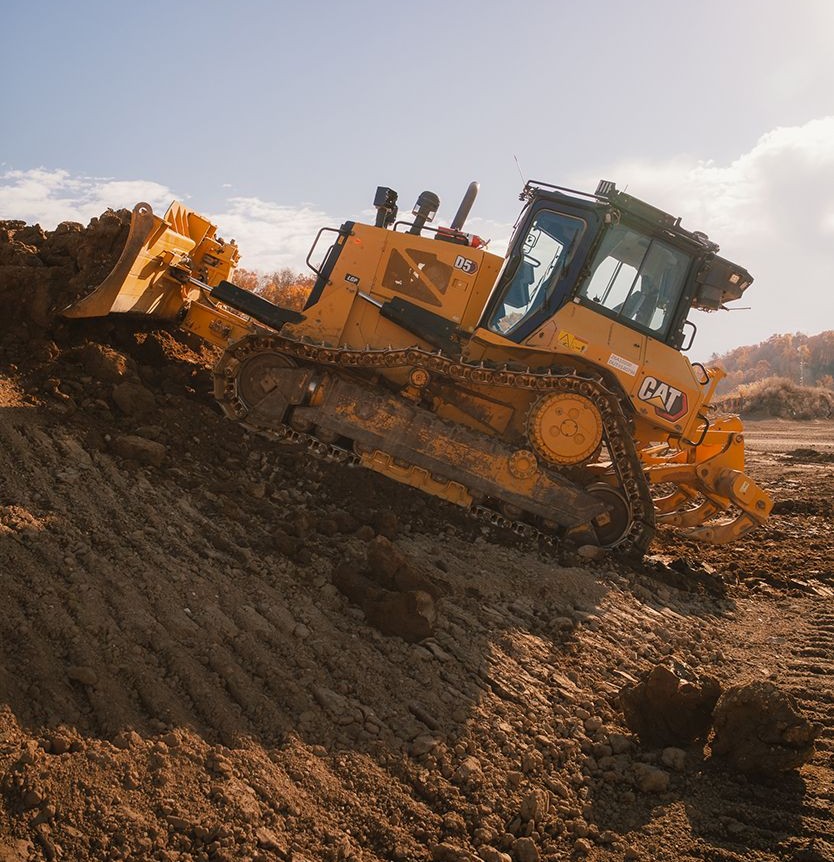
Software is going to be a key factor in making this leap to greater autonomy, Mahan says. But autonomy is not the only area where software can make a difference. There are other areas relevant to Caterpillar, such as tools that would help create engineering drawings (“a big resource and time suck”) more quickly, or enhance work instructions or manufacturing assembly instructions.
At the same time, hardware remains the core of what Caterpillar does. Its biggest AI investment in recent years was in Novarc, which is applying the technology to build smart robotic welding systems.
Software may be the differentiator when it comes to enabling machinery to perform a function, but that enhanced product still needs sensors, some kind of driving component and a control mechanism on the actual vehicle.
“There are going to be ways that software can help, but you’re still not going to be able to just run computer code on the jobsite and the site manifests itself,” Mahan says. “Machinery is required – how that interacts is going to largely depend on the data and how you acquire the data, but then also how it’s leveraged in the field.
Steady returns and a wider view – the benefits of Caterpillar Ventures’s fund-of-funds strategy

Although it is best known for its direct investments, Caterpillar Ventures has been actively exploring fund-of-fund commitments in recent years. It has quietly built up a portfolio of 19 limited partner positions in other funds, according to Mahan (right), a move that has paid dividends on the financial side.
“If you can be consistent in fund investing, the benefits are great because you create natural, regular returns over time,” he says. “You never know what the great vintage is going to be, so consistent fund investing over the years ensures that you hit that great vintage no matter what.”
Caterpillar Ventures has been around since 2015 and is now at the point where the funds it initially backed are generating returns and boosting its financial performance even in an environment where M&A and IPO activity has been slow.
The fund-of-funds strategy isn’t just about returns, it also enables the unit to get an eye on the most disruptive technologies. The team could pay a consultant $5m for a detailed report that takes six months and then they go away, explains Mahan. Or they can put $5m into fund-of-fund investments and get a return as well as keeping in touch with what’s happening on the ground, including in areas it may not be exploring directly.
“Our direct investment strategy is largely in the series A and B range, whereas our fund investment strategy is largely in the pre-seed and seed range,” he says.
“When we look at an industry or technology space where we’re doing a fund investment, we can leverage this as a learning experience. Not only are we going to see what the emerging entrepreneurs are trying to disrupt, we’ll get to experience the areas where actual customer adoption is taking place, what kind of business models are being accepted by the market, what kind of white spaces are actually seeing demand and which ones are not through the fund portfolio.”
The sentiment extends to where the funds are investing, Mahan says, adding that the smart money tends to pool. Sometimes when a fund Caterpillar Ventures has backed starts to see strong growth in a certain area this can help inform Caterpillar’s business strategy.
Another benefit of forming strong relationships with funds is that they can be a way onto a competitive startup cap table.
“We get informed by the funds, because they are investors in these companies,” he says. “We glean insights from them that help us make smarter direct investment decisions, because these funds have been invested into these startup companies for a number of years, so they know the performance. They know who’s doing well. And they can say: ‘hey, we’re going to do this next round, you guys should really consider participating directly’.”