Avram Miller, cofounder of Intel Capital, says CVCs that focus on financial returns lose sight of the strategic insights they should bring to the corporate.
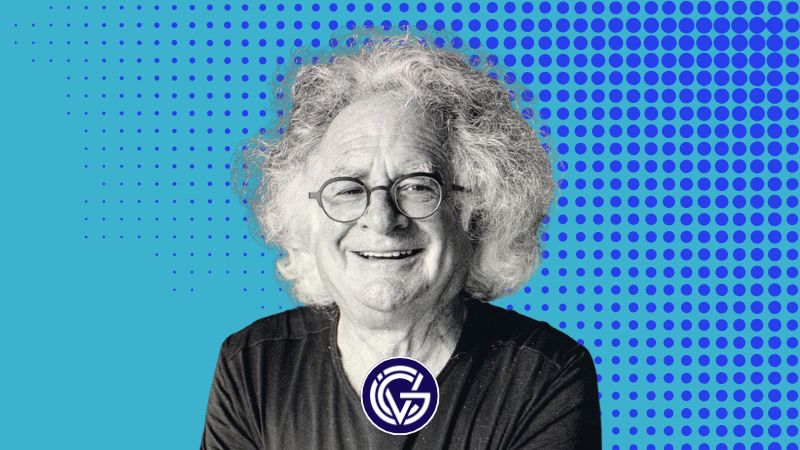
Focusing on making financial returns from corporate venture capital and having the investment unit report to the chief financial officer are the biggest mistakes made in CVC, says Avram Miller, who originally co-founded Intel’s VC investment arm, Intel Capital, some 34 years ago.
Miller can be considered the grandfather of corporate venture capital, having started to make minority investments in startups at Intel in 1988, well before it was common practice for corporates. After having success with these investments, Miller co-launched with Les Vadász the Corporate Business Development group, later renamed Intel Capital, in 1991.
Intel Capital is one of the longest-running CVCs, but its tie to Intel was in doubt earlier this year when it announced a plan to spin off the investment unit after reporting a $18.8bn net loss for 2024. The new CEO, Lip-Bu Tan, who was appointed in March 2025, soon reversed that decision and Intel Capital remains part of the corporate.
In August this year, GCV wrote a story examining how Intel lost touch with its investment arm, which was originally set up to steer the corporate through market disruptions. Miller got in touch after reading the article to give his perspective on the reasons that Intel Capital failed to future-proof Intel’s business, the original raison d’etre of corporate venture capital.

His advice to CVCs to focus on strategic insights flies in the face of the prevailing discussion over best practices in today’s corporate venture capital sector, where many practitioners emphasise the need for financial returns as well as gaining strategic insights from investments.
“We didn’t think of ourselves as venture capitalists.”
“We didn’t think of ourselves as venture capitalists,” says Miller, who spoke to GCV from his home in Italy, where he advises the Italian Institute of Technology on spinning out research projects. “We thought that early-stage investment was a strategic tool.”
Miller formed three objectives for Intel Capital when it launched 34 years ago. The first was to gain insight into the future of the business by working with startups and feeding that insight back into the company’s strategic planning. The second goal was to find ways to accelerate the company’s business lines. The third was “to make enough money to keep the bean counters off our back.”
Despite de-emphasising financial returns, the unit did in fact make a lot of money. The team started with $50m to invest with. By the time Miller left in 1999, the portfolio was worth $9bn, he says. “We were the most successful corporate venture group in the world in terms of size.”
At the time, the team were able to make good investment decisions because “we had a perspective of what was going to happen that other venture capitalists didn’t have,” says Miller. He also says the CVC set the startups up for success simply by having Intel as an investor. “People said, Intel’s investing, there must be something there. And so, it would be a self-fulfilling prophecy,” says Miller.
“I also think we were pretty good at it. We applied rigour to it.”
Business units too focused on the short term
To gain strategic insights from startups and to help them become commercially successful, many corporate VCs have set up specific roles to match portfolio companies with business units. This was something that Miller eventually ditched while at Intel Capital because he felt the strategy wasn’t working.
“At the beginning, we decided we should always work with the business units. And that turned out not to be that smart, because the business units were very focused on the short term and what could help their business. We wanted to focus on the corporation. Eventually I got an agreement that it was OK, I could just decide to invest.”
When Miller joined Intel, the company’s core product was the memory chip. It wanted to expand into the computer processors sector and hired Miller, who came from Franklin Computer Company, which at the time was a player in the personal computer market. One of Miller’s biggest investments areas at Intel was in computer networking as well as residential broadband, sectors that he predicted could bring future growth to Intel.
Miller’s early investments include Broadcast.com, Verisign, Broadcom, Geocites and CNET.
Miller eventually left Intel because the CEOs who headed the chipmaker while he worked there – Andy Grove and Craig Barrett – “didn’t have a strategic bone in their body”.
“I used to say the difference between Greg and Andy is that Andy wanted the same old ideas from the same old people, and Craig wanted new ideas from the same old people,” says Miller.
Intel did not respond to requests for comment.
“Like many corporate venture funds that are financially driven, they report to the chief financial officer. That’s the biggest mistake you can make.”
Avram Miller, cofounder of Intel Capital
After Miller left, Intel appointed Arvind Sodhani to head the CVC unit in 2005. Sodhani was treasurer at Intel for 17 years before he became president of Intel Capital, a position he held for more than a decade. “Arvind was a brilliant treasurer of the company, he was really good at managing money. And he didn’t know anything about technology, he didn’t know that much about business.
“He looked at Intel Capital financially, and like many corporate venture funds that are financially driven, they report to the chief financial officer. That’s the biggest mistake you can make,” says Miller.
Miller later persuaded the CEO of US hospital system Cleveland Clinic, which he worked for as an adviser after he left Intel, to move its venture group, which reported to the head of finance, to its research division. “I said, you have got to move this out of finance and stick it with the research group. [I said] you have no business investing in venture capital as a financial thing,” says Miller. “This is strategic – to be able to invest in things that will make patients better.”
‘CVC teams should report to R&D’
Miller doesn’t discount the importance of CVCs making money. A corporate venture unit will not survive for long if it loses money. But financial return is not the main reason it should exist, he says. “It has to be strategic. It has to report to whoever is driving the strategy of the company.”
Corporate venture capital is a way “to have influence to expand beyond just your employees. It’s a way of doing things without having to hire people. It’s a way of finding businesses that you might acquire.”
It is still an open question whether Intel will keep hold of its investment unit. It may have a more stable future tied to the corporate after the chipmaker’s financial troubles calmed following a $8.9bn equity investment from the US government in August 2025. The capital injection shows how strategically important the US administration views the corporate to the country’s semiconductor manufacturing capabilities.
Chipmaker Nvidia, which Intel has struggled to compete with in the market for AI chips, announced shortly after the US government’s investment that it would collaborate with Intel to jointly develop data centre and PC products. As part of the deal, Intel will build chips that integrate into Nvidia’s GPUs.
It doesn’t make sense for Intel to spin out the investment unit, says Miller. “I would milk it, try to get as much cash out of the business as I could. Then I might keep a small group of strategic investments that are really important.”

Kim Moore
Kim Moore is the editor of Global University Venturing and deputy editor of Global Corporate Venturing and produces video for the website.