Europe's consumer startups are hitting a rich vein of acquisitions, and the media-for-equity investors that backed them are set to reap the rewards.

“The last, let’s say, 12 months have been incredible” for media-for-equity investors, says Niko Waesche, co-founder of media-for-equity fund German Media Pool.
Media-for-equity, where a media company takes equity in a startup in return for advertising, has started to see strong exits for portfolio companies, re-igniting interest in the model.
The media-for-equity model was pioneered in Europe, which is still where many of the most active investors operate. The first wave of startups to use the process as a way to reach the mainstream were direct-to-consumer businesses like fashion ecommerce company Zalando and online travel agent Trivago which were bought or went public at high valuations in the 2010s. Exits dried up in the wake of the covid-era boom period of 2020 to 2022, however, which meant returns were slow in coming for media investors. Now a rejuvenated exit market is giving media-for-equity a new shot in the arm.
Startups that have benefited from media for equity include: Zalando, Trivago, What3Words and Pinterest.
“Across the whole venture capital industry there was this peak in 2021 and 2022, and [afterwards] it was all about cost cutting and profitability. There was very little movement and very little investment,” says Waesche.
“Since the middle of 2025 things have been very positive for media for equity and for us.”
German cannabinoid producer Sanity Group was merged into Canadian peer Organigram last week at a valuation of up to €250m ($294m), having previously taken media-for-equity from German Media Pool and peer SevenVentures. Another German Media Pool portfolio company, supplement brand Bioniq, was acquired by Herbalife late last month.
The boom looks to be extending to consumer-facing startups in general, with UK-based chauffeured lift service Blacklane and plant-based food distributor Huel both being snapped up in billion-dollar acquisitions over the past month. There is a hot market in Europe again, and that is set to benefit the media-for-equity investors that have backed startups in that area.
Those funds stretch across the continent and each have their own niche, often providing strategic and creative assistance as part of the investment package. Whether a startup is looking for a media partner to penetrate a new market, or an investor wants to open up its consortium to help its startup reach the next level, here is a guide to 10 of the most prominent.
Aggregate Media
Sweden’s Aggregate Media is perhaps the grandfather of all media-for-equity funds. Launched in 2002, it has taken equity stakes in more than 250 small and medium-sized enterprises in that time. Unlike some of its counterparts, it invests in business-to-business startups as well as consumer-facing companies.
Aggregate counts some of the largest media groups in the Nordics among its backers and its media offering is also more diverse than usual, covering digital mediums like podcasts and online video alongside traditional channels like magazines, newspapers and out-of-home advertising.
Although Aggregate mostly takes small minority stakes through small funding rounds, it can be flexible on those parameters. It was part of a 2024 series A round for anti-obesity platform developer Yazen that topped $21m, and its stake in a business can hit 30%, as with Cool Company, a Swedish invoicing service it later exited. The firm recently agreed to divest its stakes in eight more startups to investment firm Collaxio.
SevenVentures
SevenVentures is the media investment arm of German television and online media group ProSiebenSat.1, typically supplying between €2.5m to €30m ($3m to $36m) per deal for startups looking to penetrate the German or Austrian markets.
The unit has been around for 15 years and has a more flexible offering than most of its peers. In addition to media-for-equity, startups can exchange future revenue for media. It also runs an accelerator that provides convertible debt financing for earlier-stage startups, and a growth equity arm that can provide up to €50m through a combination of media and cash.
The approach has led to more than 30 exits for SevenVentures that include Sanity Group as well as Zalando, which floated in a $664m IPO in 2014, direct-to-consumer mattress company Casper and home improvement management platform Houzz.
German Media Pool

Founded the same year as SevenVentures, German Media Pool is a veteran of the media-for-equity scene, having backed 50 companies, three of which have gone public as part of some two dozen exits.
Unlike funds that invest on behalf of one media company, the firm has 50 partners across television, radio, out-of-home and social media across Europe, allowing it to offer multimedia packages to its portfolio from seed stage onwards.
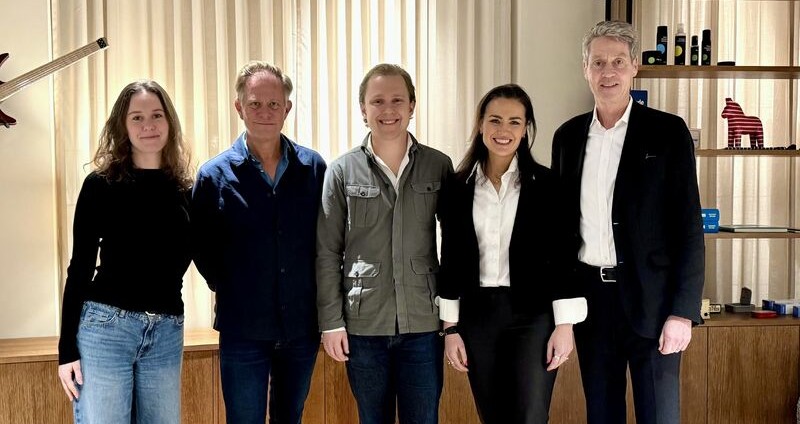
The model also enables it to provide larger packages – it supplied up to $70m in media for mapping app developer What3words in 2022. Waesche (right) says there is more scope for partnership beyond multimedia. He believes a combination of retailers, consumer brands and media companies could be the future of consumer investing.
“If you look at, for example, British American Tobacco or (German supermarket chain) REWE, you have these retail brands, you have these FMCG brands and you have the media groups,” he says. “I think this idea of combining forces to promote emerging startup brands can be quite powerful.”
“You have these retail brands, you have these FMCG brands and you have the media groups. This idea of combining forces to promote emerging startup brands can be quite powerful.”
The increasingly attractive environment for exits is good news for the media companies that have partnered with German Media Pool and a vindication for its investment model, but Waesche says that model is also useful for those long-standing businesses to show that they are still valuable channels for marketing.
“In general, our partners are traditional above-the-line media companies that have been trying to find solutions to the digitisation [of media] and to all of those developments” he says. “They’re always very happy to participate in media for equity because it gives them the ability to prove to startups, to these emerging brands, that above-the-line media can still work, even for very digital companies.”
5M Ventures
France-based 5M Ventures operates a little differently to other media-for-equity investors, providing the model as part of a wider accelerator for direct-to-consumer startups that can also access fundraising and consulting services from the firm.
As a result, 5M’s partners include angel investors, family offices and investment firms along with domestic media companies that span traditional media channels and online media platforms.
The firm presents a fundraising evening five times a year, when it presents five startups to a group of 100 investors. It invests in startups itself through a cash fund that operates alongside its media-for-equity offering.
Channel 4 Ventures

The media-for-equity arm of Channel 4, the UK TV channel with a reputation for alternative programming, Channel 4 Ventures targets consumer-facing startups based in its home country, or those looking to expand there.
The unit’s earliest investments included social media platform Pinterest, which exceeded a $50bn market cap in 2021, as well as recruitment app developer Jobs Today and crowdfunding platform Crowdcube, but its largest deal was its last one, when it supplied over $10m in media as part of a $25m round for property transaction services provider OneDome in February.
“If I think about the overall landscape, I think we’re a little bit more robust than we have been in the last three to four years,” says Vinay Solanki (left), head of Channel 4 Ventures. “There’s a wider awareness that consumers are being overlooked by a wide range of investors.”
Although online advertising proved to be an extremely effective tool for app developers to gain market traction in the last decade, Solanki points to evidence that mass-media advertising genuinely pushes the needle for startups in 2026, when the reach of digital marketing has become more limited as the internet and social media have become more atomised.
“I’ve seen dramatic changes in digital marketing economics by doing awareness marketing, which changed the equity story for the company and that’s working in our favour,” he says.
“Even if cash is coming back in, you’re always better off taking the media at the same time.”
“Even if cash is coming back in, you’re always better off taking the media at the same time. If you’ve got 30-40% or above awareness as well as a digital marketing budget, you’re always going to be way more efficient. You’re going to have an edge.”
Ad4Ventures
Ad4Ventures is the premier media-for-equity fund in Southern Europe, investing on behalf of Italian mass media group Mediaset, which provides advertising on the web, television, radio and outdoor digital screens in its home country and Spain.
The fund targets digital business-to-consumer companies with the potential for double-digit growth and an ambition to achieve a high market share in markets relevant to Mediaset. It structures its media so startups benefit from digital channels at seed stage, moving to radio at early/growth stage and, once they reach a certain size, TV.
Ad4Ventures currently oversees a portfolio of two dozen companies including two that have reached €1bn valuations: Germany-based tech product rental service Grover and Italian payment platform developer Satispay.
DMG Ventures

The Daily Mail remains one of the world’s biggest online news sources and its owner, Daily Mail and General Trust, claims to have provided over £250m ($339m) in capital and media for startups. Unlike some other media-for-equity funds, it provides cash as well as media space to startups through its Headline Fund.
“We decided to be part cash, rather than being a pure media-for-equity fund because, especially when you’re talking about seed and series A, a lot of the time the companies genuinely need cash and that’s just the reality of life,” says Manuel Lopo de Carvalho (right), who co-founded DMG Ventures as managing partner in 2017.
“It’s very difficult to come in with a simple in-kind payment when you’re competing with cash payers, especially in more contested deals. Our pitch to them is very simple: We want to show skin in the game so here’s a bit of cash that that you guys need, and that shows we are in the same boat as you.”
DMG Ventures offers startups a discount of about 50% to agency rates for its media and will typically deal with companies through the Headline Fund at seed or series A stage. By the time they reach series B or C, all-media deals make more sense and those are conducted by its Scale Fund. The unit is now looking at more overseas startups and larger deals, at later stages, says Lopo de Carvalho.
“We’re doing more [in the] US than we used to do and we’re doing more series A and later-stage stuff, and less earlier-stage than we used to do, because we see the US as a more liquid market at the ends,” he adds. “And with series A, you are closer to an exit.”
UKTV Ventures
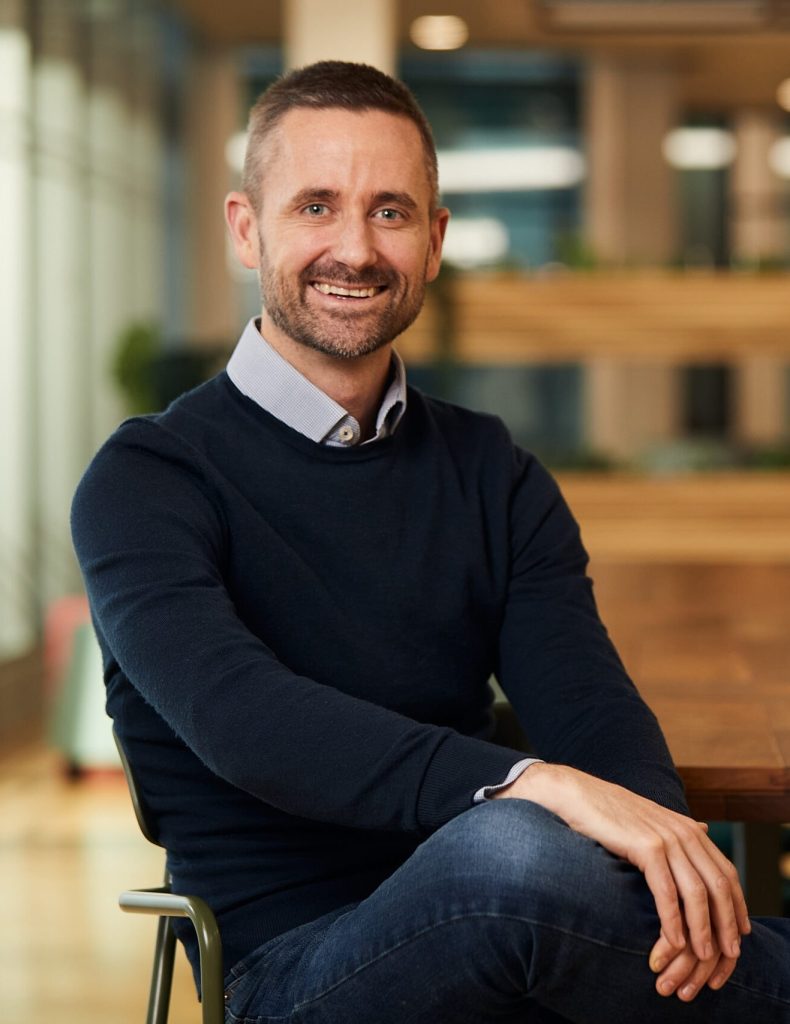
UKTV oversees a range of digital TV channels available through Freeview boxes in the UK, and it claims those channels have some of the strongest direct response rates in that market. Its UKTV Ventures fund isn’t among the largest players, but that can be an advantage, says director Brendan Kilcawley (left).
“We’re a smaller fund than the other ones out there, but our efficiency rates are a lot higher because we’re a smaller network,” Kilcawley says. “We’re able to get frequency alongside reach, which is one of the benefits of a smaller network versus some of the bigger networks, where you spend your money very quickly.”
UKTV Ventures has an annual budget of £8m ($10.9m) of media to provide in return for equity at seed to series B stage, with portfolio companies getting the chance to access its in-house media team.
The unit typically gifts 17.5% of additional media inventory on top of what it provides for equity and will contribute to the financing of a portfolio company’s TV commercial. It will also help in other ways. If a startup is struggling with changes to Google’s algorithm, for example, a UKTV digital expert can advise them on what to do, while its corporate affairs team can offer expertise on tax.
UKTV Ventures has built a portfolio of nearly a dozen, predominantly British startups that includes social media platform WeAre8 and senior care provider Elder. It is open to any consumer-facing operator but is best positioned for the four sectors its programming revolves around: automotive, food, travel and pets.
“That’s where we’re strongest,” says Kilcawley. “So, a lot of the time we are looking for targets within those sectors because generally, when somebody advertises alongside those programmes, they’re showing up in a warm environment. And that’s where we see some of the strongest conversion rates.”
ITV AdVentures
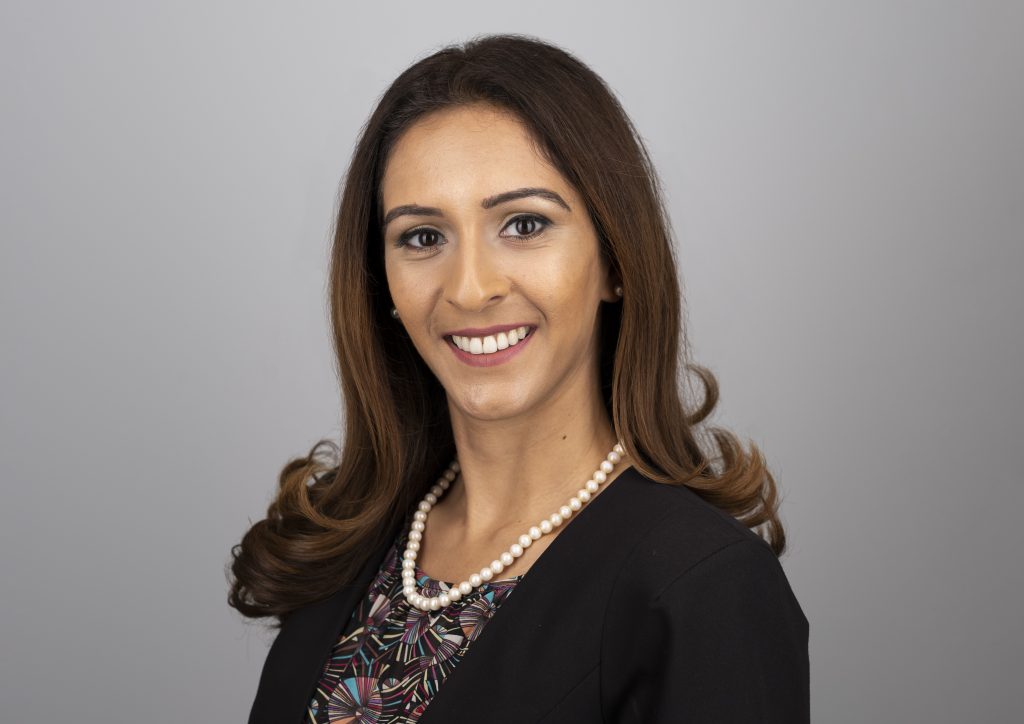
ITV is the UK’s largest commercial TV operator, reaching some 35 million viewers a month across its channels, but media-for-equity fund ITV AdVentures isn’t just relying on its reach. It also offers startups very favourable advertising rates, says director Sheena Amin (right).
“For us, the capital efficiency point is much stronger because, essentially, you’re getting a much bigger bang for your buck with the media terms that we offer, and therefore you’re able to deliver more,” she adds.
“Beyond that, we offer all aspects that you need to successfully launch and sustain a successful television campaign. We have a dedicated media planning team that works hand in glove with each portfolio company’s marketing or growth teams, really getting under the bonnet of what the key growth objectives and KPIs are that underpin the customer segmentation data, and then building a flexible and bespoke media plan.”
ITV has its own in-house team of creatives as well as a network of external creative agencies it can introduce to portfolio companies. ITV AdVentures executed five deals last year, not including follow-ons, and Amin says the unit views that as its floor going forward.
“We’ve had a really strong start to the year and I’m pretty positive about the prospects going forward,” she says. “In the broader equity-for-services market, there is definitely increased appetite for corporates that maybe weren’t previously considering the model to innovate and try new things.”
8 Media Ventures
Media-for-equity was born in the Nordics so it should be no surprise that newer operators have joined the fray. 8 Media Ventures (8MV) was founded in Finland in 2021 and targets high-growth direct-to-consumer companies.
8MV has since built a nine-strong portfolio that includes low-carbon dog food brand Alvar, emotional health resources marketplace Sakura and Koite Health, developer of a light-based dental treatment system.

Robert Lavine
Robert Lavine is special features editor for Global Venturing.